Maintenance crews, inspection teams and emergency responders share a common challenge: they cannot choose when or where work happens. A pipe bursts at 2am. A fault develops on a railway line during a night possession. A safety inspection must be completed before a site can reopen. In every case, the right lighting determines whether the job gets done safely, quickly, and to the standard required.
Site lighting for these applications demands more than raw brightness. Equipment must deploy instantly, perform reliably under pressure, and withstand the environments where urgent work takes place. This guide covers what professional teams need to know when specifying lighting for maintenance, inspection, and emergency response operations.
Why Lighting Is Critical in These Applications
Standard worksites can afford to plan lighting infrastructure in advance. Maintenance, inspection and emergency response rarely offer that luxury. Work happens at unpredictable locations, often under time pressure, and always with safety implications.
Poor lighting in these situations directly increases risk. Missed details during inspections lead to failures downstream. Inadequate illumination during emergency response slows decisions that may be time-critical. Maintenance crews working in poor light make errors, suffer injuries, and take longer to complete tasks.
Professional-grade portable lighting eliminates these risks. The right equipment delivers reliable, high-quality illumination regardless of location, power availability or environmental conditions — so teams can focus entirely on the work.
Types of Operations and Their Lighting Requirements
Each application within this category presents distinct demands. Understanding what differs between them guides better equipment selection.
Planned Maintenance
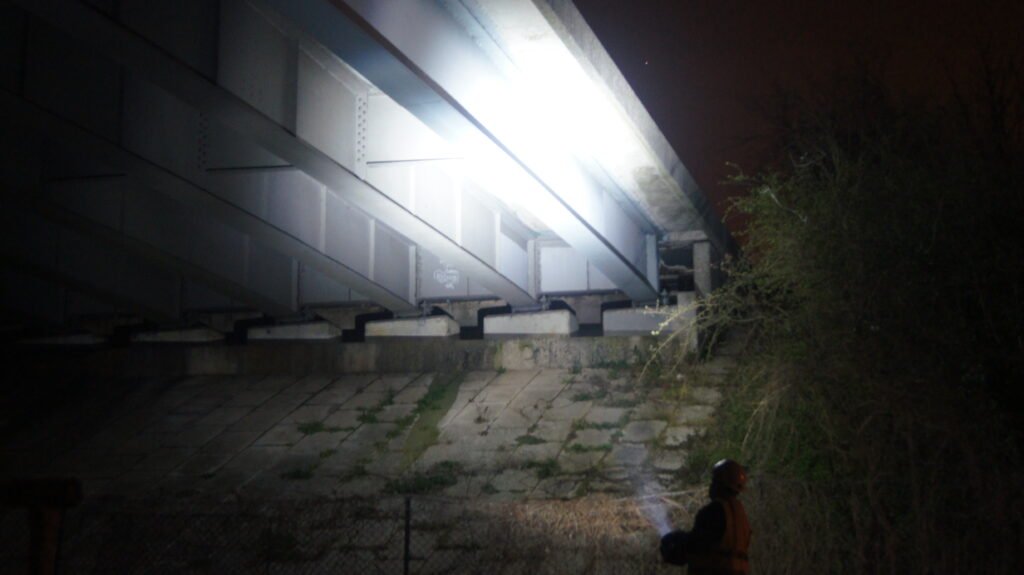
Scheduled maintenance often occurs outside normal working hours to minimise disruption. Infrastructure maintenance — on water networks, gas systems, electrical equipment, and highways — typically happens at night or during limited access windows. Teams need lighting that deploys quickly at the start of a shift and can be repositioned as work progresses through different sections of a site.
Key requirements: fast setup, runtime sufficient for a full shift, and enough portability to reposition as the task moves without extended interruption.
Inspection Work
Inspection tasks demand different things from lighting. Rather than flooding a large area, inspectors often need focused, directional illumination that reveals surface detail, identifies defects, and allows accurate documentation. A powerful floodlight may actually create glare and shadows that obscure the detail an inspector needs to see.
Quality rechargeable head torches are essential for inspection work. Hands-free illumination that follows the user’s line of sight allows inspectors to use both hands on tools, equipment, or documentation without compromising visibility. For larger structures and confined spaces, supplementary portable lighting provides general illumination while the head torch handles detail work.
Emergency Response
Emergency situations remove every element of control. Location is unknown in advance. Access may be difficult. Time is the defining constraint. Equipment that isn’t ready to work immediately simply isn’t suitable.
Emergency response lighting must be instantly deployable — no setup sequences, no fuelling, no cable runs. Responders arriving at an incident scene need to position lights and begin work within seconds, not minutes. Battery-powered rechargeable LED lighting meets this requirement in ways that generator or mains-powered systems fundamentally cannot.
Comparing Lighting Approaches for Unplanned and Mobile Operations
| Factor | Mains-Powered | Generator | Rechargeable Battery |
|---|---|---|---|
| Deployment speed | Slow — requires infrastructure | Slow — fuelling and setup | Immediate — carry and switch on |
| Location flexibility | Fixed to supply point | Limited by cable runs | Fully mobile |
| Indoor/confined space use | Possible | Not suitable (emissions) | Safe — zero emissions |
| Noise output | Low | High | Silent |
| Runtime | Unlimited | Unlimited (with fuel) | 4–12+ hours depending on model |
| Emergency readiness | Poor | Poor | Excellent |
For maintenance, inspection and emergency response, rechargeable portable lighting addresses the core constraints that make other approaches impractical. The combination of instant deployment, complete mobility, and silent operation matches the realities of how these teams work.
Essential Equipment Categories
Effective lighting for maintenance, inspection and emergency applications typically combines several equipment types. Each serves a specific function within a complete lighting kit.
Rechargeable Head Torches
Head torches are the foundation of any inspection or maintenance lighting setup. Hands-free, personal illumination that follows the user’s gaze is irreplaceable when both hands are occupied with tools, test equipment, or documentation.
For professional applications, look beyond consumer-grade head torches. Industrial-standard rechargeable head torches offer significantly higher lumen output, longer runtime on a single charge, and the durability to survive demanding site conditions. Key specifications to compare:
- Lumen output: 300–1000+ lumens for demanding professional use
- Beam options: Spot beam for distance, flood beam for close work — dual-mode units provide both
- Runtime: Minimum 6–8 hours on working output for shift-length coverage
- IP rating: IP65 or higher for reliable outdoor and wet environment use
- Battery indicator: Essential for monitoring charge status during extended operations
Portable LED Floodlights
Where inspections or maintenance tasks require illuminating larger areas, portable rechargeable LED floodlights deliver broad coverage without infrastructure dependency. Stand-mounted units allow precise positioning, while compact handheld units suit rapid repositioning as work moves through different areas.
For emergency response specifically, portable floodlights must combine high output with genuinely fast deployment. A unit that requires five minutes to set up and position correctly is not emergency lighting — it is a delay.
Area Lighting Systems
Larger maintenance operations and emergency incidents often require substantial area illumination. Telescopic mast lighting systems elevate light sources for wider, more even coverage across work zones. A single well-positioned area light can replace multiple individual units, simplifying both logistics and on-site management.
Searchlights
Long-range illumination has specific uses in inspection and emergency response. Perimeter assessment, search operations, and identifying access routes in poor visibility conditions all benefit from portable searchlights that project concentrated beams across distances that standard floodlights cannot reach.
Hazard and Warning Lights
Any operation near traffic, pedestrian access, or public areas requires visible warning signals independent of task lighting. Emergency response and roadside maintenance in particular must alert others to the work zone while the team focuses on the task. Portable rechargeable hazard lights round out a complete mobile lighting kit.
Lighting for Confined Spaces and Restricted Environments
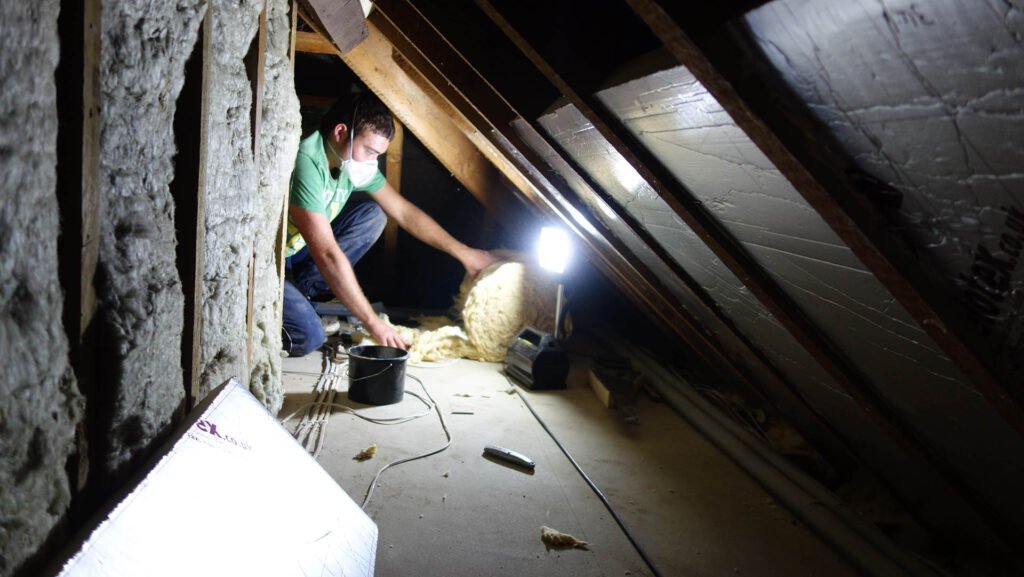
Confined space work — in tunnels, tanks, excavations, basements, and enclosed structures — presents specific requirements that eliminate generator-powered lighting entirely. Combustion engines produce exhaust that cannot be safely dispersed in enclosed spaces, creating serious health and safety risks.
Battery-powered LED lighting produces zero emissions at point of use, making it the only appropriate choice for confined space operations. This applies equally to maintenance crews working in underground infrastructure, inspection teams assessing enclosed structures, and emergency responders entering confined incident scenes.
Beyond emissions, confined spaces present other lighting considerations:
- Reflective surfaces can create glare from high-output lights — adjustable brightness settings help manage this
- Directional control matters more in enclosed spaces where light bounces unpredictably
- Cable management is simplified significantly without generator feeds running through access points
- ATEX certification is required in any confined space with potential explosive atmosphere — petrochemical facilities, certain utilities infrastructure, and similar environments
Emergency Response: Specific Requirements
Emergency response lighting deserves particular attention because the stakes are highest and the operational conditions most demanding.
Readiness and Reliability
Equipment that hasn’t been maintained and charged between deployments may fail when it’s needed most. Emergency response teams must establish charging routines that ensure every unit in the fleet arrives at an incident scene with full or near-full charge. This requires discipline in fleet management — tracking charge status, establishing return-to-depot charging protocols, and never sending units back to readiness storage in a depleted state.
Instant Operation
Lights used for emergency response must switch on and perform immediately without warm-up periods, startup sequences, or configuration steps. LED lighting meets this requirement inherently — full output is available the instant the unit is switched on.
Durability Under Impact
Incident scenes are physically demanding environments. Equipment gets knocked over, exposed to water, dropped, and generally subjected to the conditions of emergency work. Lighting that fails to perform after a minor impact or unexpected rain shower is a liability. Look for robust housings, shatter-resistant lenses, and IP ratings appropriate for outdoor emergency conditions.
Sufficient Output
Emergency situations require illumination that enables confident, accurate work at speed. This is not the context for minimising power consumption to extend runtime — it is the context for delivering the output the situation demands. Teams should operate at the brightness level required and rely on sufficient battery capacity and backup units rather than compromising on illumination quality.
Planning Lighting Kits for Mobile Teams
Teams operating across multiple locations and responding to unpredictable incidents benefit from standardised lighting kits that cover likely scenarios without requiring on-site decisions about equipment.
A practical mobile maintenance and emergency lighting kit might include:
- 2× rechargeable head torches per team member
- 2–4× portable LED floodlights with stands
- 1× area lighting system for larger incidents
- 1–2× portable searchlights for long-range capability
- Rechargeable hazard warning lights as required
- Charging equipment and spare batteries for extended deployments
Standardising equipment across the fleet simplifies training, spare parts management, and interchangeability between teams. Mixed equipment from multiple manufacturers creates complexity that costs time and money precisely when both matter most.
Key Environmental Factors
✓ IP rating matched to operating environments (minimum IP65 for outdoor use)
✓ ATEX certification for explosive atmosphere locations
✓ Zero-emission battery power for confined spaces
✓ Cold weather battery performance for winter outdoor operations
✓ Impact resistance for emergency and demanding site conditions
✓ Noise compliance for residential area night works
Compliance and Certification for Professional Use
Professional and industrial applications carry specific certification requirements that equipment must meet. Purchasing non-compliant equipment for professional use creates liability exposure and may invalidate insurance.
CE and UKCA marking confirms compliance with applicable safety directives and should be present on any professional-grade lighting equipment used within the UK and EU.
IP ratings (Ingress Protection) indicate resistance to dust and water. IP65 provides protection against dust and water jets — appropriate for most outdoor maintenance and emergency response applications. Higher ratings apply to more demanding submersion or extreme exposure scenarios.
ATEX certification is mandatory for equipment used in explosive atmospheres. This covers petrochemical facilities, certain utilities infrastructure, grain handling, and similar environments. Standard lighting cannot be used in these locations regardless of its other specifications.
Sector-specific requirements apply in some industries. Railway operations, utilities contractors, and major construction clients often maintain approved equipment lists. Verify that selected lighting meets the requirements of your operating environments before committing to fleet-wide procurement.
Total Cost Considerations
Evaluating lighting for maintenance, inspection and emergency response requires looking beyond purchase price to the full operational cost picture.
| Cost Factor | Generator Lighting | Rechargeable LED |
|---|---|---|
| Fuel costs | Ongoing — significant | None |
| Charging costs | N/A | Minimal electricity cost |
| Setup labour | Significant per deployment | Near zero |
| Transport requirements | Heavy equipment + fuel | Lightweight, self-contained |
| Maintenance | Regular servicing required | Minimal |
| Incident readiness | Poor — setup time required | Excellent — immediate use |
For teams deploying frequently across multiple locations, the operational cost advantage of rechargeable lighting compounds substantially over equipment lifetime. Reduced fuel expenditure, lower transport overhead, and faster deployment combine to deliver meaningful savings compared to generator-dependent approaches.
Choosing the Right Equipment for Your Team
Specifying lighting for maintenance, inspection and emergency response should begin with honest assessment of how your teams actually operate.
Questions to guide specification:
- What is the typical duration of deployments? (Determines runtime requirements)
- What are the most demanding locations your teams operate in? (Determines IP and ATEX requirements)
- How many concurrent operations might you need to support simultaneously? (Determines fleet size)
- What is the minimum acceptable deployment time for emergency callouts? (Confirms battery power as the appropriate approach)
- Do your teams work in confined spaces? (Confirms zero-emission requirement)
- Are noise restrictions relevant to your operations? (Reinforces battery power advantage)
The answers to these questions determine equipment specifications, fleet quantities, and the specific product categories your teams need. Getting this right once avoids the inefficiency and safety compromises of working with equipment that doesn’t match operational realities.
Frequently Asked Questions
Rechargeable battery-powered LED lighting is the most suitable option for emergency response. Instant deployment, zero emissions, silent operation, and complete mobility address the specific constraints of emergency work. Equipment should include head torches for individual responders and portable floodlights for scene illumination. Readiness depends on maintaining charging discipline between deployments.
For shift-length maintenance operations, a minimum of 8 hours runtime at working output levels is recommended. This provides coverage for a standard shift with margin for battery ageing and cold weather performance reduction. At reduced brightness settings, many professional units achieve 10–12+ hours. Always verify runtime specifications at the output level you will actually operate at, not the maximum quoted brightness.
Yes, battery-powered LED lighting is the correct choice for confined spaces. Unlike generator-powered alternatives, battery LEDs produce zero emissions at point of use, eliminating the exhaust hazards associated with combustion in enclosed environments. For confined spaces with potential explosive atmospheres, ensure equipment carries appropriate ATEX certification.
 British Made For Quality