Most people pick a head torch based on lumen count. Bigger number, better torch, job done.
In practice, it’s not that simple. The beam type determines whether that light actually works for your task – and getting it wrong means squinting at shadows, missing detail, or blinding yourself off reflective surfaces.
This guide cuts through the confusion so you can match the right beam to the right job.
Spot, Flood or Wide Beam – What’s the Difference?
There are three main beam patterns you’ll come across in professional rechargeable head torches. Each has a specific purpose.
Spot beam – projects a concentrated, long-range beam. Useful for seeing things at distance. Think working in tunnels, navigating across a site at night, or checking along a roofline.
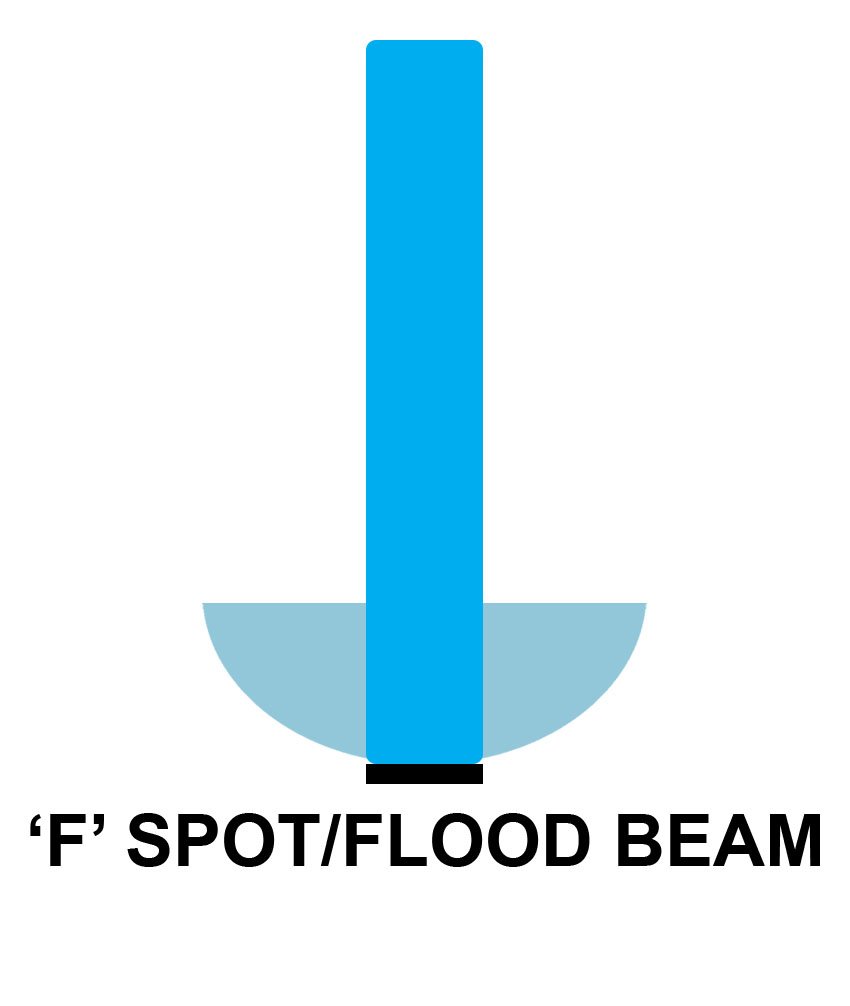
Flood beam – wide, even spread of light close to the user. Ideal for most hands-on tasks: reading measurements, working inside a panel, doing maintenance in a confined space.

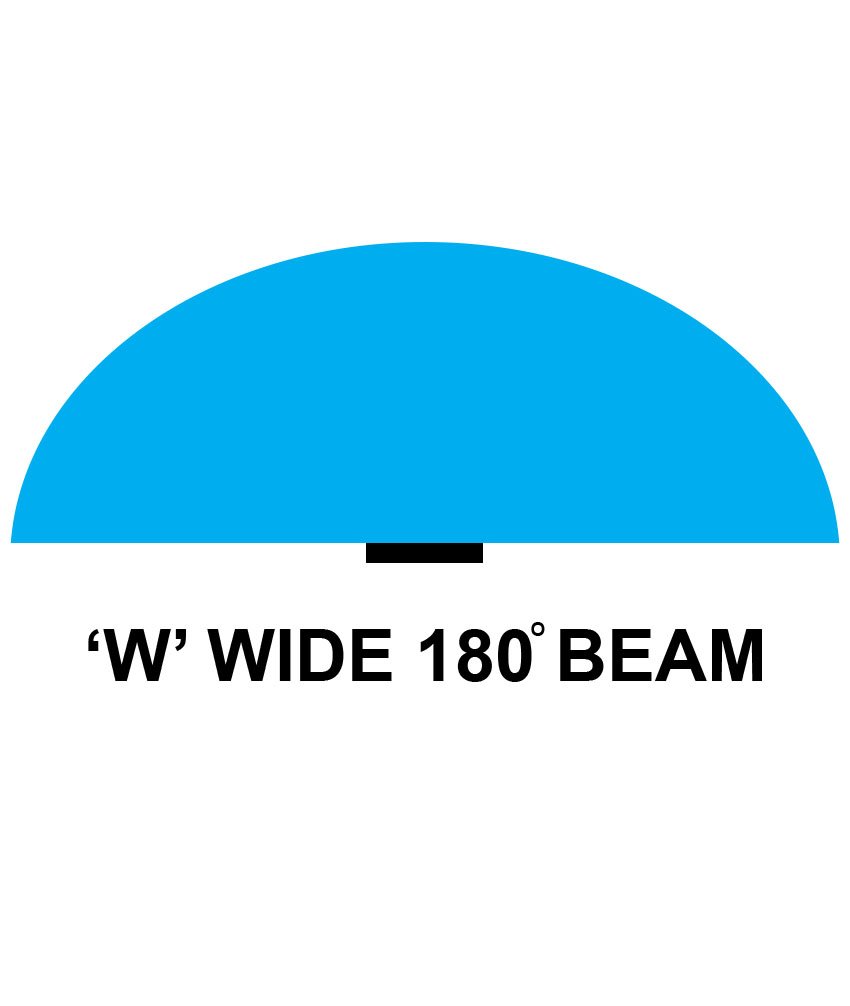
Wide/area beam (180 degrees) – essentially floods the space around you. Best for general awareness, walking between work areas, or lighting a broad workspace without a stand-mounted unit.
Most quality work head torches let you switch between modes. That flexibility is worth more than raw output in most scenarios.
Matching Beam Type to Your Work
| Application | Best Beam Type | Why |
|---|---|---|
| Electrical and wiring work | Flood | Focused, close-range detail |
| Pipeline and duct inspection | Spot + Flood | Distance first, then close detail |
| General maintenance | Flood or Wide | Even coverage across the work area |
| Railway track inspection | Spot | Long-range visibility along track |
| Emergency response | Wide + Flood | Awareness and task work combined |
| Confined space entry | Flood | No glare bouncing off walls |
| Site navigation at night | Spot or Wide | Distance or broad ambient light |
Why Lumen Count Alone Misleads You
A torch rated at 3000 lumens firing a narrow spot into a small machinery compartment is actively unhelpful. You’ll get a harsh hot-spot surrounded by darkness.
A 600 lumen flood beam across the same task illuminates everything you need to see.
Lumen output matters most when:
- You genuinely need long-range throw (searchlight-level distances)
- You’re working in a large open space
- Conditions are foggy, dusty or smoky and light scatter is a factor
For the majority of maintenance, inspection and emergency work, beam quality and pattern matter more than peak output.
What to Look For in a Professional Head Torch
Dual or multi-mode switching – the ability to move between spot and flood without taking the torch off your head. Glove-friendly switching is a must on site.
Brightness levels – at minimum, high and low. Low mode extends runtime significantly. On a long shift, you’ll use it.
Runtime at working brightness – always check the spec at mid or high output, not the maximum quoted figure, which is typically measured at the lowest setting.
IP rating – IP65 minimum for outdoor and site use. Protection against dust and water jets covers the vast majority of UK working conditions.
Beam memory – restarts at your last-used setting rather than cycling back to maximum every time. Small feature, genuinely useful in practice.
Rechargeable via USB-C – standard across modern professional units. Charge from a van, site office, or power bank during a break.
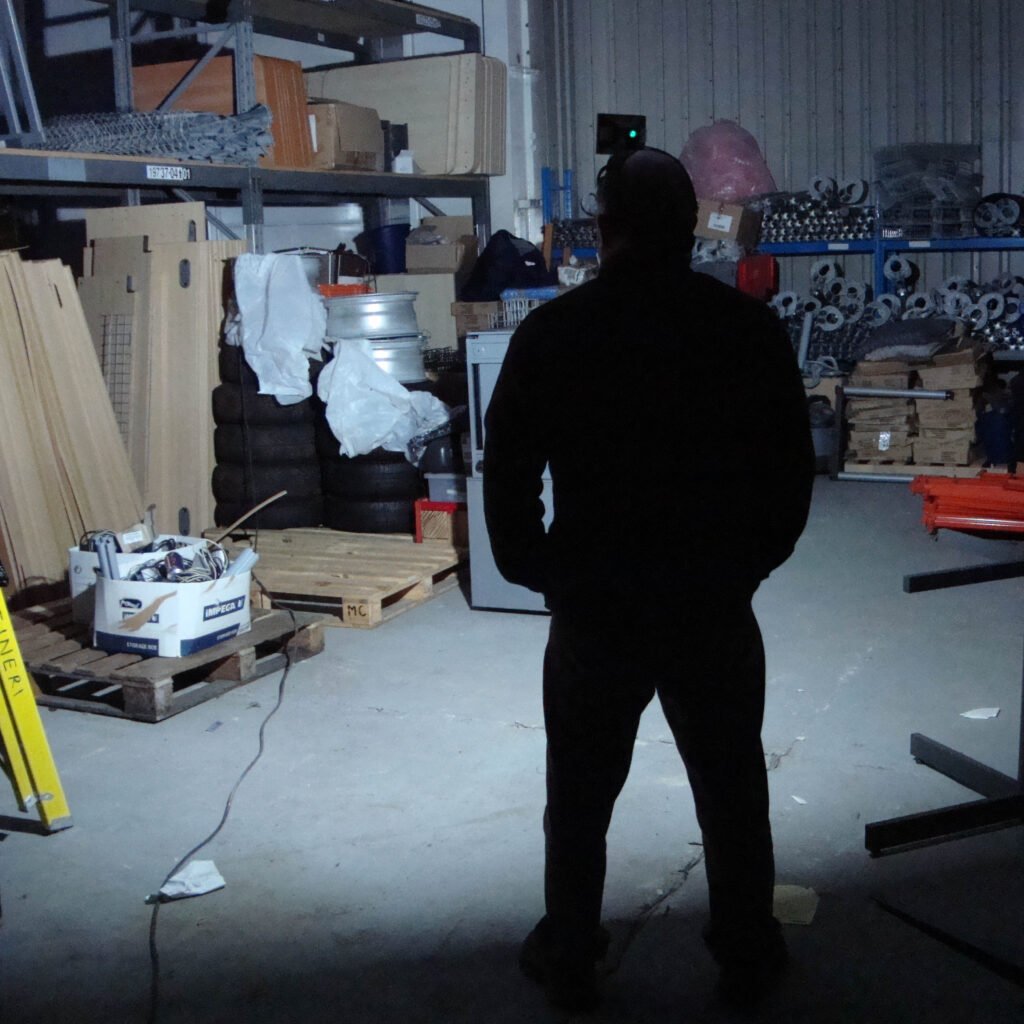
Samalite Head Torches: Which Model Suits Your Work?
Samalite’s head torch range covers everything from compact everyday carry units to high-output professional torches built for demanding environments.
The HL600W and HL600F are the entry points – compact, rechargeable, and suited to general maintenance and inspection work where you need a reliable everyday carry unit.
Step up to the HL1300W for more output without sacrificing wearability. A practical choice for night works, railway maintenance, and tasks where you’re moving between lit and unlit areas throughout a shift.
The HL3XF and HL3000W sit at the top of the range. High output, long runtime, built for demanding professional use. If your work takes you into low-light environments where there’s no margin for inadequate illumination, these are the units to look at.
Head Torches as Part of a Complete Lighting Kit
A head torch handles personal, directed illumination. It doesn’t replace area lighting for a work zone.
For larger tasks, a portable LED floodlight handles general site coverage while the head torch picks up close detail work. That combination – area light plus personal torch – gives you coverage and precision at the same time.
For tasks involving long-range visibility across a site perimeter, access routes, or large open areas, a searchlight provides reach that no head torch can match.
If your work puts teams near traffic or public areas, hazard warning lights complete the kit by alerting others to the work zone independent of your task lighting.
Quick Reference: Beam Type Summary
Spot beam – distance, long-range, navigation, track and structure inspection
Flood beam – close task work, components, panels, confined spaces, inspection detail
Wide/180 degree beam – general awareness, moving around site, broad workspace coverage
Multi-mode – the most practical choice for professionals switching between task types throughout a shift
Frequently Asked Questions
Flood beam. Electrical work is close-range and requires even, glare-free illumination across components. A tight spot creates harsh contrast that makes it harder to see fine detail. Look for a head torch with a smooth, wide flood pattern and high CRI for accurate colour rendering when identifying cables.
For a standard shift, aim for a minimum of 8 hours at mid-output. Many professional units achieve this comfortably. Always check runtime at the brightness setting you’ll actually use.
IP65 as a minimum. This provides complete dust protection and resistance to water jets from any direction, which covers typical UK outdoor conditions including rain, splashing, and dusty environments. For work involving potential submersion or high-pressure washing nearby, IP67 or IP68 offers additional protection.
Yes. Rechargeable LED head torches produce zero emissions and minimal heat, making them suitable for confined spaces where combustion-powered lighting would be unsafe. For confined spaces with potentially explosive atmospheres, check that equipment carries the appropriate ATEX certification.
It depends on the scale of the task. For close, individual work (inspection, electrical tasks, component examination) a quality head torch is often sufficient. For larger areas or tasks requiring two people to work with clear mutual visibility, combining a head torch with a portable floodlight provides the coverage a head torch alone cannot deliver.
What’s the difference between the HL600 and HL3000W? Output, runtime, and build specification. The HL600 series suits everyday maintenance and inspection tasks where a compact, lightweight unit is the priority. The HL3000W delivers significantly higher output with extended runtime for demanding environments where maximum performance is required. Both are rechargeable and built to professional standard.
 British Made For Quality