
Rapid response teams don’t get to choose their conditions.
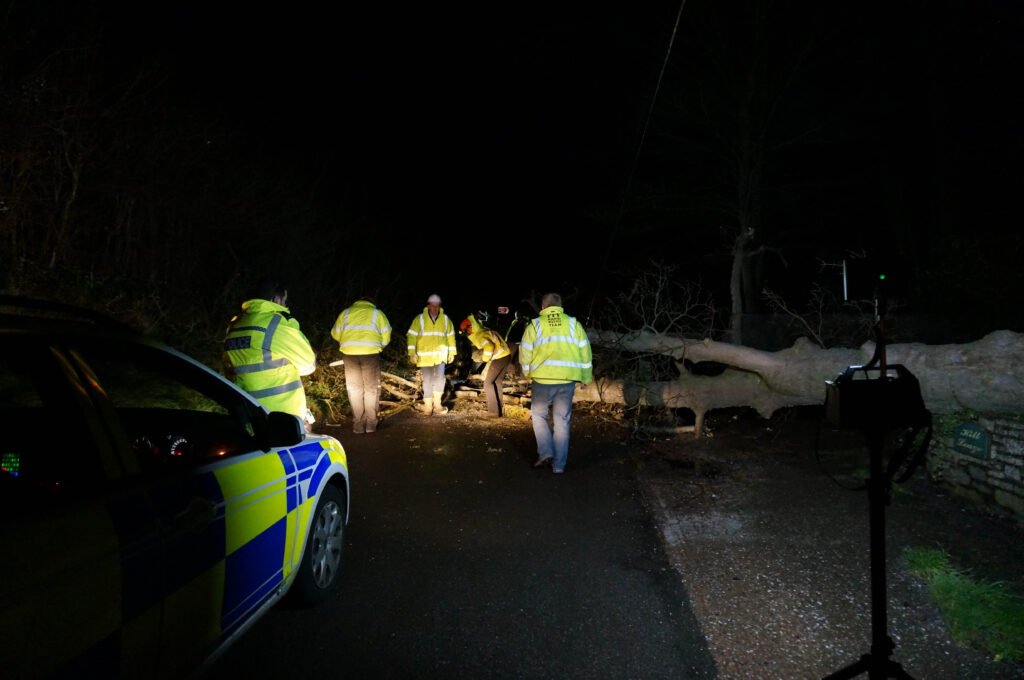
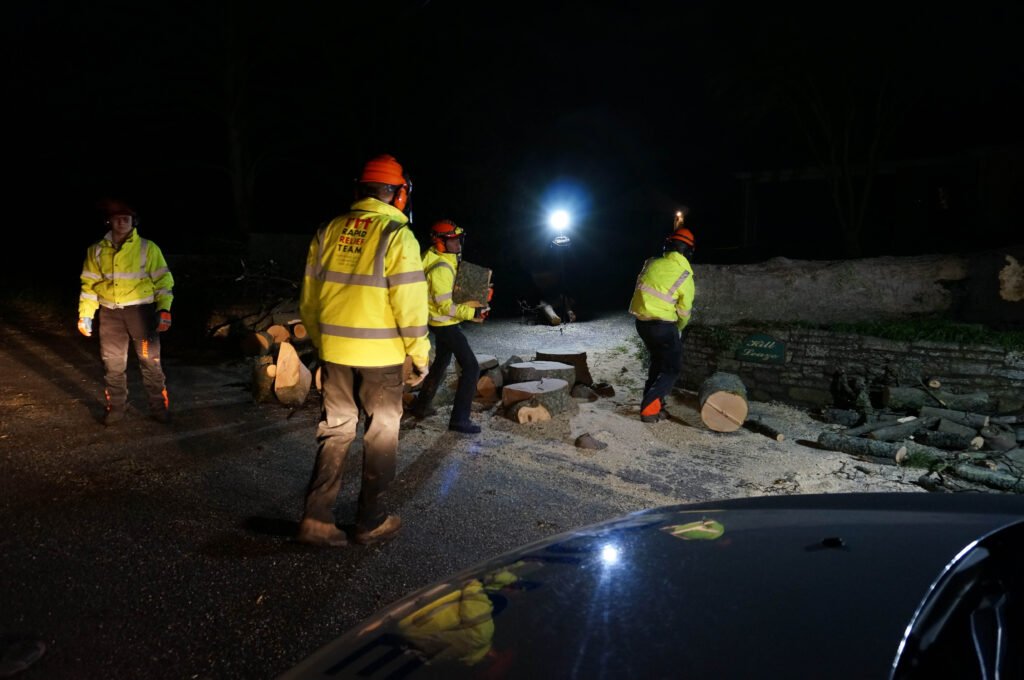
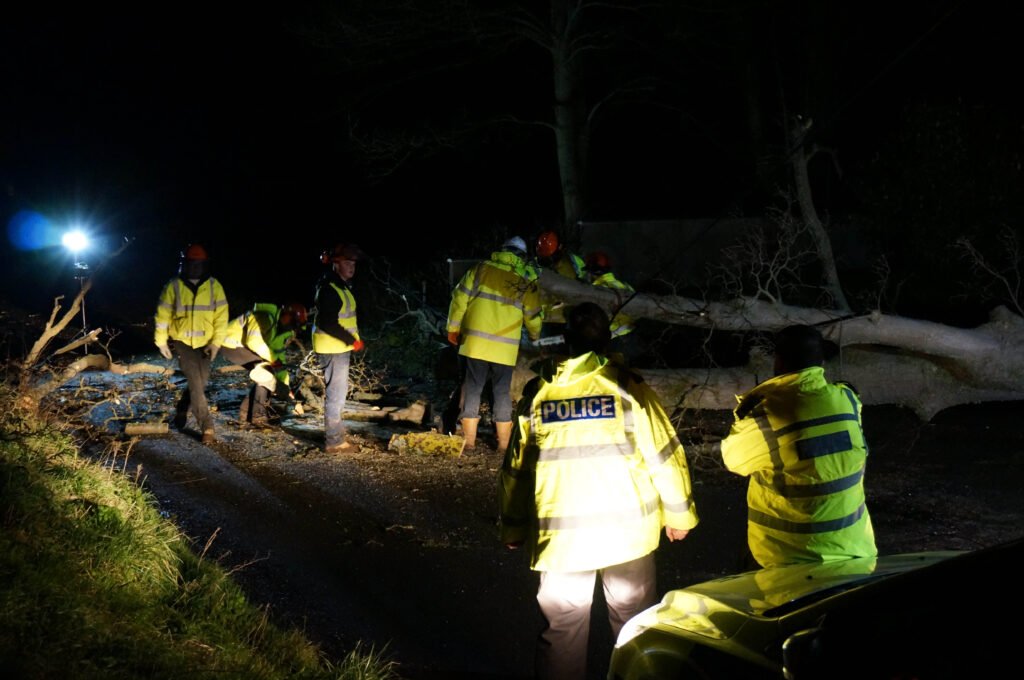
The call comes in, the vehicle rolls, and within minutes the team is on scene – often in complete darkness, in unfamiliar locations, with no power supply and no time to spare. What’s in the vehicle is what they have to work with.
That reality puts portable lighting in a different category for emergency and rapid response applications. It isn’t just about brightness. It’s about what’s ready, what deploys in seconds, and what keeps working under pressure across an entire deployment.
The Core Problem With Traditional Lighting in Emergency Vehicles
Generator-powered lighting is the historical default for serious outdoor illumination. It works well when time and access allow for setup. Emergency response rarely offers either.
Running out a generator at an incident scene means fuelling, starting, cable management, and positioning before a single useful lumen reaches the work area. In a time-critical situation, that sequence costs minutes that may not be available.
There are other practical problems too. Generators are heavy. They take up significant vehicle storage space. Fuel requires careful management in a fleet context. And exhaust emissions rule them out entirely for any incident in an enclosed or semi-enclosed environment.
Modern rechargeable LED lighting solves all of these problems at once. Units sit charged in the vehicle, ready to go. Deployment is carry, position, switch on. No sequence. No dependencies. No delay.
What Rapid Response Lighting Needs to Do
The demands on lighting carried in emergency and response vehicles are specific. General-purpose site lighting doesn’t always meet them.
Deploy without delay. From vehicle to operational in under a minute. Any setup steps between those two points represent a problem.
Work anywhere. No mains supply. No generator. No nearby infrastructure of any kind. Battery-powered means genuinely location-independent.
Perform in confined spaces. Emergency scenarios regularly involve enclosed environments – plant rooms, basements, vehicle underbodies, drainage infrastructure. Zero-emission battery lighting is the only appropriate option in these spaces.
Survive vehicle storage. Equipment lives in the back of a van or response vehicle between callouts, sometimes for weeks. It gets knocked around, exposed to temperature variation, and handled in a hurry. It needs to be robust enough to cope with all of that and still work when it matters.
Cover multiple tasks with one kit. A response team may need scene illumination, personal hands-free lighting, long-range visibility, and hazard warning all at once. The vehicle kit needs to cover the full range without becoming unmanageable to carry or store.
Lighting Types for Emergency Vehicle Kits
Getting the right combination of equipment into a vehicle kit requires understanding what each type actually contributes.
Portable Floodlights
The workhouse of any emergency lighting kit. A portable rechargeable floodlight illuminates the immediate scene, giving the team working light across the task area without anyone needing to hold a torch.
Stand-mounted units free up hands and allow precise positioning. For incidents requiring sustained illumination while the team works – a repair, an extraction, a technical assessment – a stable, positioned floodlight is the foundation everything else builds on.
Samalite’s Eco-Flood range covers compact portable units suited to vehicle carry. The Ultralight series is particularly well suited to rapid response – lightweight, high output, and built to deploy fast.
Area Lighting for Larger Incidents
Some incidents require more than a single floodlight. Major roadside works, multi-team responses, and incidents in open outdoor environments benefit from elevated area lighting that covers a wider footprint from fewer positions.
The ALU area lighting range with telescopic masts provides this capability in a self-contained, rechargeable format. Higher output and greater elevation mean one unit can replace multiple smaller lights, simplifying on-scene management when things are already complex.
Rechargeable Head Torches
Every member of a rapid response team should carry a quality rechargeable head torch. Scene floodlights handle general illumination – head torches handle the close, directed detail work that makes up the actual task.
Hands-free operation is essential when you’re working on equipment, supporting a colleague, or documenting an incident. A head torch that follows your line of sight puts light exactly where attention goes.
For demanding emergency use, output and runtime both matter. The HL1300W provides strong working output with the shift-length runtime that unpredictable incidents require. For the highest demands, the HL3000W delivers maximum performance where there’s no acceptable margin for inadequate illumination.
Searchlights
Arriving at an incident scene in darkness, the first priority is usually assessment. What is the extent of the problem? Is the access route safe? Are there hazards beyond the immediate area?
A powerful searchlight answers those questions quickly. The reach of a dedicated searchlight goes far beyond what any floodlight or head torch can provide, enabling rapid scene assessment before the team commits to positioning and working.
Samalite’s SL2000Li delivers long-range portable illumination in a handheld format – ready to sweep and assess an incident scene on arrival without any setup required.
Hazard Warning Lights
Task lighting and warning lighting serve completely different purposes. One illuminates the work. The other protects the team from the environment around the work.
Any rapid response operation near roads, pedestrian areas, or public access requires visible warning signals positioned independently of the work area. The Magnaflash Kit provides rechargeable LED warning beacons that deploy in seconds, remain visible at distance, and pack down small enough to carry in any response vehicle without difficulty.
Organising a Vehicle Lighting Kit
How lighting is stored in a vehicle determines how quickly it can be deployed. Equipment buried under other kit, in mismatched bags, or without a consistent location adds time and friction at exactly the moment neither is available.
A few principles that make a real difference:
Designate fixed storage positions. Every item has a place. Everyone on the team knows where it is. No searching at scene.
Store ready to deploy. Lights should come out of the vehicle charged, with any stands or mounts attached. Packing away loosely means reassembling under pressure.
Keep the kit complete. After every deployment, check the kit back in against a fixed list. Missing items get noticed at the depot, not at the next incident.
Charge on return. Every unit goes back on charge after every deployment, regardless of how much battery was used. Partial charges left unchecked become depleted units at the next callout.
Vehicle Kit by Response Type
Different response operations have different priorities. A single kit configuration won’t be optimal for every team, but these starting points cover the most common scenarios.
| Response Type | Core Kit |
|---|---|
| Roadside and highway | 2x floodlights, head torches, hazard warning lights, searchlight |
| Utilities emergency | 2x floodlights, head torches, searchlight |
| Confined space incident | 2x floodlights (battery only), head torches, hazard warning lights |
| Railway and trackside | 2x floodlights, head torches, searchlight, hazard warning lights |
| Industrial and plant | 2x floodlights, head torches, searchlight (ATEX if required) |
| Multi-team major incident | Area lighting unit, multiple floodlights, head torches, hazard warning lights |
In every case, carry charged spares. Extended incidents will exhaust a standard kit, and there’s no reliable way to predict duration at the point of callout.
Weight, Size and What Actually Fits in a Response Vehicle
Lighting is one category among many competing for vehicle storage. Heavy, bulky equipment that demands dedicated space creates practical problems for fleet and logistics managers.
Modern rechargeable LED lighting has improved significantly on both dimensions. Units that deliver professional output now pack down to a fraction of the size and weight of equivalent generator-fed alternatives.
The Ultralight range is specifically designed with portability as a primary requirement – high output without the bulk that makes carrying and storing equipment difficult for teams already managing tools, PPE, and other response equipment.
For head torches, weight becomes a comfort factor over long deployments. Lighter units reduce neck fatigue during extended incidents where the torch may be worn continuously for several hours.
Certification and Compliance for Emergency Use
Equipment specified for professional emergency response should carry appropriate certifications for the environments where it will be used.
IP65 minimum for any equipment used outdoors. Protection against dust and water jets covers standard UK outdoor conditions reliably. Higher ratings apply for environments where submersion or extreme water exposure is possible.
ATEX certification for any response to incidents in petrochemical, gas, chemical, or other potentially explosive atmosphere environments. This is a legal requirement, not an optional consideration. Standard lighting equipment cannot be used in these zones.
UKCA and CE marking confirm compliance with UK and EU safety standards and should be present on all professional-grade equipment.
If your response teams cover industrial, utilities, or energy sector incidents, verify ATEX compliance during procurement rather than discovering the gap on scene.
Frequently Asked Questions
What lighting should be carried in an emergency response vehicle? A complete vehicle kit should cover four functions: scene illumination (portable floodlights), personal lighting (rechargeable head torches), long-range visibility (a searchlight for scene assessment on arrival), and hazard warning (rechargeable LED warning beacons). The specific quantities depend on team size and the nature of incidents you respond to, but every response vehicle should have all four capabilities represented.
Why is rechargeable battery lighting better than generators for rapid response? Deployment speed is the primary reason. Battery-powered lighting is operational in under a minute – carry to position, switch on. Generator setup involves fuelling, starting, and cable management before any light is available. For rapid response, that difference is significant. Battery lighting is also lighter, produces no emissions for safe confined space use, and eliminates fuel management complexity.
How do you keep emergency vehicle lighting ready between callouts? Charge every unit after every deployment, regardless of remaining battery level. Assign fixed storage positions in the vehicle so equipment is always in the same place and checked back in consistently. Build a post-deployment kit check into standard procedure to catch missing or damaged items before the next callout, not during it.
What output do head torches need for emergency response work? For demanding emergency use, 1000 lumens or more at working output is a practical target. More important than peak output is runtime at that level – aim for 8 hours minimum to cover extended incidents. Dual-mode capability (spot and flood) adds versatility when the team moves between scene assessment and close task work during a deployment.
Can portable lighting be used at road traffic incidents? Yes, and it should form part of any highway response kit. Task lighting for the work area and hazard warning lights for team and scene visibility serve different purposes and both are needed. Rechargeable LED hazard warning beacons deploy quickly and remain visible at distance without requiring any power connection. Position warning lights before starting task lighting setup.
What is the best portable searchlight for emergency response vehicles? A searchlight for emergency response needs to be handheld, immediately operational, and capable of long-range throw for scene assessment. The SL2000Li is designed for exactly this use – powerful, portable, and ready to work the moment it comes out of the vehicle.
Do I need ATEX-rated lighting in emergency response vehicles? If your teams respond to incidents in petrochemical facilities, gas infrastructure, chemical plants, or any environment with potentially explosive atmospheres, yes. ATEX certification is a legal requirement for lighting used in those zones. If there is any possibility of your teams entering such environments during a response, ATEX-rated equipment should be part of the vehicle kit.