Temporary worksites present unique lighting challenges. Locations change, power availability varies, and work schedules often extend beyond daylight hours. Unlike permanent installations where lighting infrastructure can be carefully planned and installed, mobile operations need equipment that adapts to shifting conditions without compromising safety or productivity.
Industrial site lighting for temporary applications must balance portability with performance. Equipment needs to deploy quickly, withstand demanding environments, and deliver reliable illumination regardless of available infrastructure. Getting this balance right affects everything from worker safety to project completion timelines.
This guide examines the key considerations for specifying and deploying temporary site lighting across professional and industrial applications.
What Makes Temporary Worksites Different
Permanent facilities benefit from fixed lighting systems designed for specific spaces. Temporary and mobile worksites operate under fundamentally different constraints that demand different solutions.
| Permanent Installations | Temporary Worksites |
| Fixed power infrastructure Known, unchanging layout Purpose-designed fixtures One-time installation | Variable or absent power Changing work zones daily Adaptable, portable equipment Repeated setup and repositioning |
These differences drive equipment selection. Lighting that excels in permanent settings may prove entirely impractical for mobile site lighting applications where rapid deployment and repositioning matter more than maximum output from fixed positions.
Types of Temporary Worksite Applications
Temporary site lighting serves diverse professional sectors, each with distinct operational requirements.
Construction and civil engineering. Building sites, roadworks, and infrastructure projects represent the most common temporary lighting applications. Work areas shift as projects progress, requiring lighting that moves with the activity. Temporary construction lighting must handle outdoor exposure while providing sufficient output for safe working conditions.
Utilities and infrastructure maintenance. Repair crews working on water, gas, electrical, and telecommunications infrastructure need lighting that deploys instantly at unpredictable locations. Emergency callouts particularly demand equipment ready for immediate use without extensive setup.
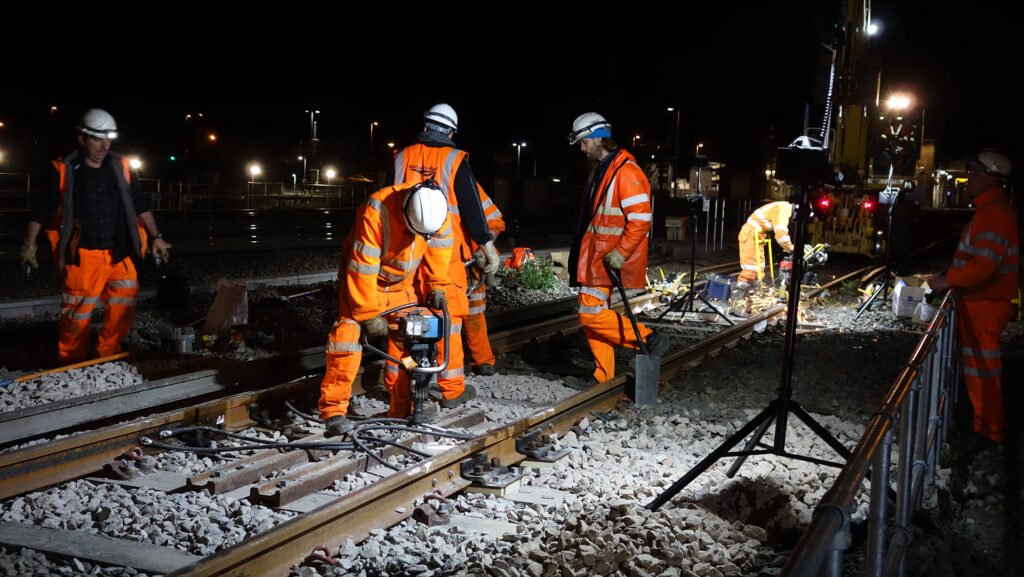
Railway and transport. Track maintenance, signalling work, and station upgrades typically occur during limited possession windows. Mobile site lighting must maximise productive time within strict operational constraints, deploying and clearing quickly.
Events and temporary facilities. Setup and breakdown of temporary structures, outdoor events, and emergency facilities all require adaptable lighting solutions that accommodate changing configurations.
Emergency response. Incident scenes, disaster response, and emergency repairs demand lighting that arrives ready to work. Response teams cannot wait for power infrastructure or generator setup when lives or critical services depend on immediate action.
Power Options for Mobile Worksites
How lighting equipment receives power fundamentally shapes its suitability for temporary applications. Each approach offers distinct advantages and limitations.
Power Source Comparison
| Power Source | Advantages | Limitations |
| Mains power | Unlimited runtime, high output capacity | Requires infrastructure, cables create hazards |
| Generator | High sustained output, no charging needed | Fuel logistics, noise, emissions, setup time |
| Rechargeable battery | Instant deployment, silent, zero emissions, fully mobile | Runtime limits, requires charging between uses |
For genuinely mobile operations, rechargeable portable site lighting increasingly represents the practical choice. Battery-powered equipment eliminates the infrastructure dependencies that constrain mains and generator options, enabling truly flexible deployment.
Essential Equipment Categories
Effective temporary worksite illumination typically combines multiple equipment types, each serving specific functions within the overall lighting scheme.
Portable floodlights provide broad area illumination for general workspace lighting. Available in various outputs and form factors, these units suit everything from small task areas to larger work zones. Rechargeable LED floodlights offer the mobility needed for temporary applications without sacrificing professional-grade output.
Area lighting systems with telescopic masts elevate light sources for wider coverage. These larger units illuminate substantial areas from single positions, reducing the number of individual lights needed while improving coverage uniformity.
Head torches deliver personal, hands-free illumination that follows the user’s line of sight. Essential for individual task work, inspection activities, and situations where fixed lighting cannot reach. Quality rechargeable head torches complement area lighting by providing focused illumination precisely where each worker needs it.
Searchlights project concentrated beams across extended distances. Security applications, perimeter checks, and long-range inspection tasks benefit from this reach capability that standard floodlights cannot match.
Warning and hazard lights alert others to work zones and potential dangers. Roadside operations, railway work, and any activity near traffic or public areas require visible warning signals independent of task lighting.
Planning Lighting for Changing Work Zones
Temporary worksites rarely maintain static configurations. Effective lighting strategies anticipate movement and change rather than assuming fixed positions.
Assess the full scope of work. Before deploying equipment, consider how work will progress throughout the task or shift. Identify all areas requiring illumination and plan equipment quantities accordingly. Under-provisioning creates bottlenecks when lights must be repositioned mid-task.
Position for flexibility. Place lights where they can serve multiple purposes or be easily relocated. Avoid positions that block access routes or create obstacles as work progresses into new areas.
Layer lighting types. Combine general area lighting with task-specific and personal lighting. This layered approach ensures adequate illumination regardless of how individual workers move within the work zone.
Plan for runtime. Calculate total illumination time needed against equipment runtime capabilities. For extended operations, arrange charging rotation or deploy sufficient backup units to maintain continuous lighting.
Environmental and Safety Considerations
Temporary worksite environments present hazards that affect lighting equipment selection and deployment practices.
Key Environmental Factors
| ✓ Weather exposure (IP ratings) ✓ Temperature extremes ✓ Dust and debris | ✓ Explosive atmospheres (ATEX) ✓ Confined spaces (emissions) ✓ Noise restrictions |
Weather resistance. Outdoor temporary sites expose equipment to rain, dust, and temperature variations. Industrial LED lighting rated IP65 or higher withstands typical conditions, but extreme environments may require enhanced specifications.
Confined spaces. Tunnels, tanks, excavations, and enclosed structures prohibit combustion-powered equipment. Battery-powered lighting produces zero emissions at point of use, enabling safe deployment where generators cannot operate.
Hazardous atmospheres. Petrochemical facilities, fuel handling areas, and similar environments require ATEX-certified equipment. Standard lighting poses ignition risks in explosive atmospheres regardless of how well it performs otherwise.
Noise sensitivity. Night works in residential areas, near hospitals, or in noise-restricted zones benefit from silent battery-powered lighting. Generator noise frequently triggers complaints and regulatory issues that rechargeable equipment avoids entirely.
Deployment Speed and Operational Efficiency
Time spent setting up and repositioning lighting is time not spent on productive work. For temporary operations, deployment efficiency directly affects project costs and completion schedules.
Rechargeable portable site lighting deploys in seconds. Carry to position, set down, switch on. No cables to run, no generators to fuel and start, no distribution boards to configure. This simplicity compounds across multiple repositioning events throughout a shift.
Railway possessions illustrate the value of rapid deployment. With strictly limited access windows, every minute counts. Lighting that deploys and clears quickly maximises productive time within the possession. Equipment requiring lengthy setup eats into already tight schedules.
Emergency response presents similar time pressures. When incidents require immediate illumination, responders need equipment that works instantly. Delays for power setup are unacceptable when safety depends on immediate visibility.
Managing Equipment Across Multiple Sites
Organisations operating across numerous temporary locations face equipment management challenges that affect operational readiness and total cost of ownership.
Standardisation simplifies logistics. Maintaining consistent equipment across the fleet enables interchangeable deployment, simplifies training, and streamlines spare parts and accessories. Mixed equipment from multiple manufacturers creates complexity that costs time and money.
Charging infrastructure requires planning. Establish charging stations at depots and ensure equipment returns with sufficient time for full charging before next deployment. Track charge status across the fleet to prevent sending depleted units to site.
Maintenance routines preserve reliability. Regular inspection, cleaning, and testing ensure equipment performs when needed. Temporary site conditions accelerate wear; proactive maintenance catches issues before they cause failures at critical moments.
Adequate fleet sizing prevents shortfalls. Calculate total equipment needs across concurrent operations, plus reserves for maintenance rotation and unexpected demand. Under-provisioning forces compromises that affect safety and productivity.
Compliance and Certification Requirements
Professional and industrial applications often mandate specific equipment certifications. Understanding requirements for your operating environments ensures selected equipment meets regulatory and client expectations.
CE and UKCA marking confirm compliance with applicable safety directives. These baseline certifications should be present on any industrial lighting equipment used professionally within the UK and EU.
ATEX certification indicates suitability for explosive atmospheres. Petrochemical, mining, grain handling, and similar sectors require equipment rated for specific hazard zones. Non-certified equipment cannot be used in these environments regardless of performance.
Sector-specific approvals may apply. Railway operators, utilities, and major contractors often maintain approved equipment lists. Verify that selected lighting meets the requirements of environments where your teams operate.
Cost Considerations for Temporary Lighting
Evaluating lighting costs for temporary applications requires looking beyond purchase price to total operational impact.
Setup and repositioning time. Labour costs during lighting deployment add up across numerous temporary operations. Equipment that deploys quickly reduces these ongoing expenses compared to alternatives requiring extensive setup.
Fuel and energy costs. Generator fuel represents a significant ongoing expense for traditional temporary lighting. Rechargeable equipment substitutes low-cost electricity for diesel, substantially reducing operating costs over equipment lifetime.
Transport and logistics. Heavy equipment requires larger vehicles and more handling effort. Portable lighting that fits in standard work vehicles and deploys without lifting equipment reduces transport costs and simplifies logistics.
Durability and replacement cycles. Equipment built to withstand temporary site conditions lasts longer than consumer-grade alternatives. Higher initial investment in robust industrial site lighting typically delivers lower total cost through extended service life.
Choosing the Right Approach for Your Operations
Effective industrial lighting for temporary and mobile worksites demands equipment designed for the realities of changing locations, variable power availability, and demanding deployment schedules. Solutions that excel in permanent installations may prove entirely unsuitable for mobile operations.
Rechargeable portable site lighting addresses the core challenges of temporary work. Instant deployment, complete mobility, and freedom from power infrastructure enable flexible operations that adapt to changing requirements. Combined with appropriate area lighting, personal lighting, and safety equipment, battery-powered solutions deliver professional illumination wherever work needs to happen.
Success depends on matching equipment to actual operational needs. Understanding deployment patterns, runtime requirements, environmental conditions, and compliance obligations enables informed specification. The investment in properly selected temporary site lighting pays returns through improved safety, enhanced productivity, and reduced operational complexity.
 British Made For Quality