
On a construction site, PPE is not optional and it does not come off for convenience. If a head torch cannot be worn with a hard hat, it has no place on site. This single requirement rules out most of the head torch market for construction use, because the majority of head torches sold are designed for hiking, running, and general outdoor use where helmet compatibility was never part of the design brief.
This guide is written specifically for construction workers, site managers, and procurement teams choosing head torches for site use. It covers what hard hat compatibility actually requires, how to specify a genuinely industrial head torch, and which options suit different construction roles.
Why Hard Hat Compatibility Is a Real Engineering Requirement
Mounting a torch to a hard hat sounds simple, but there are several practical failures that separate a genuinely hard hat compatible head torch from one that merely fits if forced.
Clip security under movement. Construction work involves bending, reaching upward, crouching, and moving through confined spaces. A torch clip that holds when standing still but shifts or drops when the wearer looks up at an overhead fixture is not fit for purpose. Genuinely compatible clips are designed and tested against the kind of movement construction work actually involves.
No interference with helmet function. A hard hat’s protective performance depends on its shell and internal cradle working as designed. A torch mount that requires drilling into the shell, or that sits in a position affecting how the helmet absorbs an impact, compromises the very protection the hard hat exists to provide. Proper hard hat compatible torches clip to the brim without altering the helmet itself.
Weight and balance over a full shift. A torch that feels fine for five minutes in a shop can feel very different after eight hours on a hard hat. Poor weight distribution creates a forward pull that causes neck strain and, in worse cases, encourages workers to remove the torch, or the hard hat, defeating the purpose of both.
Compatibility with the specific helmet type in use. Not all hard hats are built the same. Vented safety helmets, bump caps, and standard EN397 hard hats all have different brim profiles. A clip system that works well on one type may not sit securely on another.
What EN397 Compatibility Actually Means
EN397 is the European standard covering industrial safety helmets, specifying requirements for shock absorption, penetration resistance, and flame resistance among other criteria. When a head torch is described as hard hat compatible, in most cases this means the clip system is designed to fit the standard brim shape and thickness found on EN397 certified helmets.
It is worth noting that EN397 compatibility relates to physical fit, not to any additional certification of the torch itself. A head torch does not carry EN397 certification in the way a helmet does. What matters for construction procurement is confirming the clip mechanism has been tested against and fits securely on the specific hard hats your teams actually wear, since brim profiles do vary between manufacturers even within the same general standard.
Before ordering across a team, it is worth testing a single unit against your site’s actual helmet stock rather than relying on general product descriptions alone.
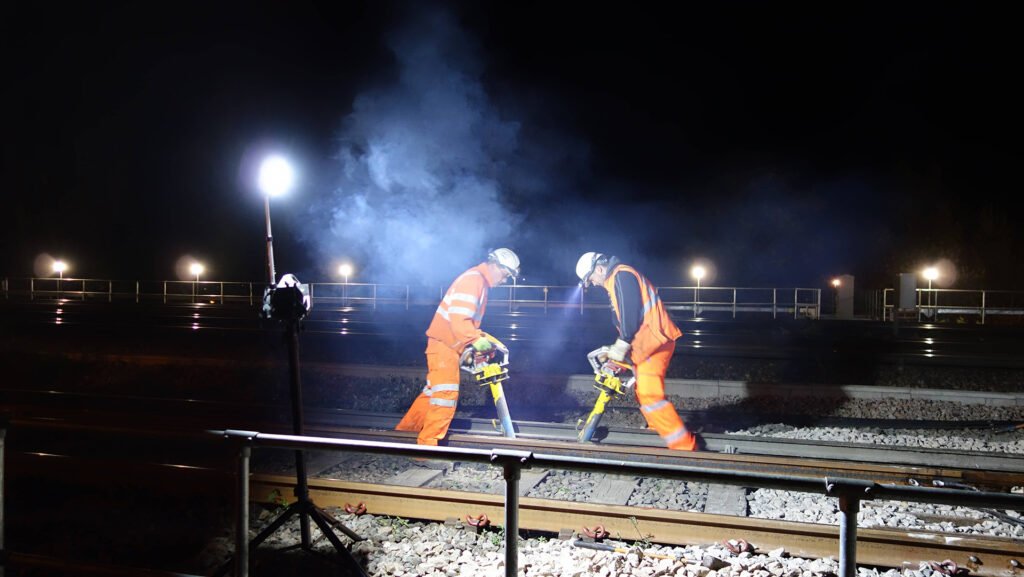
Industrial Head Torch Specifications for Construction Use
Beyond hard hat compatibility, a genuinely industrial head torch for construction needs to meet several other baseline requirements.
IP65 rating as a minimum. Construction sites are outdoor, dusty, and wet environments for a large part of the working year in the UK. IP65 confirms complete dust protection and resistance to water jets from any direction, which covers the conditions construction workers actually face.
Output matched to the task, not just maximum lumens. Close work such as first fix electrical and plumbing benefits from an even flood beam in the 300 to 1000 lumen range. Outdoor navigation, groundworks, and general site movement benefit from higher output, often 1000 lumens and above, with a wider or adjustable beam pattern.
Runtime that covers a full shift at working brightness. Many head torches quote maximum runtime figures achieved only at the lowest brightness setting, which is rarely bright enough for real work. Always check the runtime figure at the brightness level the job actually requires, not the headline number on the packaging.
Rechargeable via USB-C. Standard charging across a fleet of construction equipment simplifies logistics considerably. A single multi-port charger in the site office or works van can charge an entire team’s torches overnight without managing multiple proprietary charging cables.
Robust housing built for daily handling. Torches on a construction site get dropped, knocked, and generally handled roughly as a matter of course. Housing material and build quality determine whether a torch survives a season of daily use or needs replacing within weeks.
Matching Head Torches to Construction Roles
Different roles on a construction site have genuinely different lighting requirements, and specifying one torch type across an entire workforce often means compromising for most of them.
Electricians and first fix trades. Close, even flood beam illumination is far more useful than a bright spot beam when working inside consumer units, containment, and cable runs. Glare and harsh shadow from a narrow beam make fine detail work harder, not easier. The HL600F is built around a flood beam configuration for exactly this kind of close trade work, with hard hat compatibility built in as standard.
General site labourers and groundworkers. Outdoor movement across an active site benefits from a wider beam that provides peripheral awareness alongside forward illumination, particularly when moving around plant, materials, and other workers in low light. Higher output also matters here since there is little ambient light to work with outdoors after dark.
Site managers and supervisors. Covering ground across a whole site throughout a shift calls for a versatile torch that performs well both outdoors and in partially enclosed areas under construction. The HL1300W offers strong output with the runtime to last a full working day, suited to supervisors moving continuously between different site areas and conditions.
Trades needing maximum output and extended runtime. For extended shifts, winter working with long dark hours, or roles requiring sustained high brightness, a powerbelt configuration head torch removes the weight of a large battery from the head entirely and delivers significantly longer runtime. The HL3XF-L is built for this kind of demanding, extended use.
Practical Buying Advice for Site Managers and Procurement
Test before bulk ordering. Fit a single unit to your team’s actual hard hat model before committing to a fleet-wide purchase. A small difference in brim profile can be the difference between a secure fit and a torch that slides during work.
Standardise across the team where practical. Consistent equipment simplifies training, spares management, and charging logistics. It also means any worker can pick up any charged unit and know exactly how it performs.
Factor in winter working hours. UK construction schedules typically involve five months of the year with genuinely dark starts and finishes. Specifying adequate output and runtime with this reality in mind, rather than for ideal summer conditions, avoids under-provisioning when it matters most.
Build charging into site routine. A torch that is not charged is not available. Establish a clear procedure, such as returning torches to a charging station in the site office at the end of every shift, so equipment is always ready for the next working day.
Consider role-based specification rather than one torch for everyone. As covered above, an electrician and a groundworker have different practical needs. Specifying two or three torch types across a workforce, matched to role, typically delivers better real-world performance than a single compromise model for the whole site.
Frequently Asked Questions
A hard hat compatible head torch has a clip system specifically designed to fit securely on the brim of a standard safety helmet, typically an EN397 certified hard hat, without interfering with the helmet’s protective structure. The clip needs to hold position during active work movement such as bending and looking upward, and should not require any modification to the helmet itself, such as drilling.
The right choice depends on the role. Close trade work such as electrical and plumbing first fix benefits from a flood beam torch like the HL600F. General site work and supervision benefit from a higher output, more versatile torch such as the HL1300W. For extended shifts requiring maximum runtime, the HL3XF-L with its powerbelt configuration is worth the additional specification.
No. Many consumer head torches sold for hiking or general outdoor use are not designed with helmet mounting in mind, and their clip systems either will not fit a standard hard hat brim securely or risk shifting during work movement. Genuinely industrial head torches are specifically engineered with hard hat compatibility as a core design requirement, not an afterthought.
IP65 is the practical minimum for UK construction site use. This confirms complete protection against dust ingress and resistance to water jets from any direction, covering rain, dust, and the general wear of outdoor site conditions across a working year.
Aim for a minimum of eight hours of runtime at the brightness level the work actually requires, not the maximum runtime figure often quoted at minimum brightness. For extended shifts or winter working with longer dark hours, look for torches offering ten to twelve hours at working output, or consider a powerbelt configuration for genuinely extended deployment.
Not necessarily. Close detail work such as electrical and plumbing tasks is often better served by a lower output, even flood beam that avoids glare and harsh shadow in confined spaces. Higher output matters more for outdoor navigation and general site movement where there is little ambient light. Matching output to the specific task tends to deliver better real-world results than simply choosing the highest lumen figure available.
Most professional industrial head torches now charge via USB-C, which is straightforward to manage across a construction team using standard multi-port chargers in a site office or works van. The main difference from consumer use is the discipline required to keep a fleet of torches charged and ready, since site downtime caused by an uncharged torch is avoidable with a simple end-of-shift charging routine.