
Most yards are not well lit. The mains supply reaches the tack room and maybe the barn, but the stable block at the far end of the yard, the outdoor water troughs, the hay store, and the track between them all sit in darkness once the sun goes down.
For horse owners, that darkness creates practical problems every day. Morning feeds before dawn in winter. Evening checks in October. Night foaling watches that require reliable illumination for hours at a time. And all of it in conditions that make cables, generators, and anything that requires setup in a rush genuinely impractical.
Rechargeable battery lighting solves the stable lighting problem cleanly. No mains extension required. No generator noise to spook horses. No fumes in an enclosed stable. Carry it where it is needed, switch it on, and it works.
This guide covers what stable and yard lighting actually needs to do, the specific considerations for equine environments, and which products suit different parts of a yard.
Why Standard Lighting Solutions Do Not Work for Most Yards
The instinct when a stable block lacks light is to run a cable from the nearest socket. This works well in a purpose-built facility with proper electrical infrastructure. It is impractical for the majority of private yards and smaller equestrian establishments.
Extension cables across a yard create trip hazards in the dark – precisely when the lighting is needed. Wet conditions and exposed sockets create safety concerns in environments that are regularly muddy, wet, and subject to horses pulling or standing on anything at ground level.
Generator-powered lighting introduces its own problems specific to equine environments. Generator noise is a genuine stressor for horses, particularly at night when they are resting. Exhaust fumes in an enclosed stable are unacceptable. And the logistics of fuelling and starting a generator before a morning feed in the dark is not a realistic expectation for most horse owners.
Battery-powered rechargeable lighting removes all of these constraints. It goes where the work is, operates silently, produces zero fumes, and deploys in seconds rather than minutes.
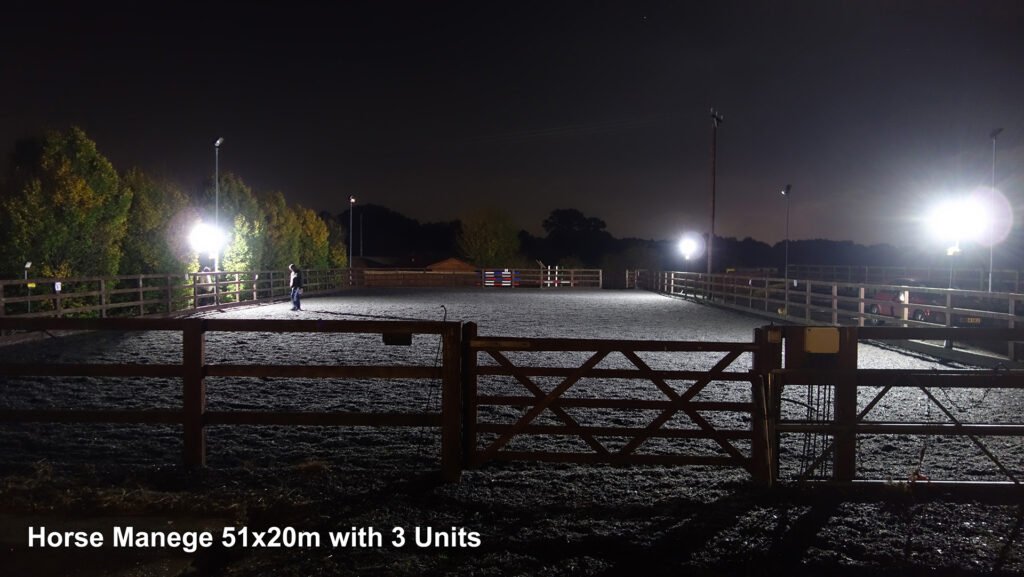
Specific Lighting Requirements for Equine Environments
Horses respond to their environment differently from people. Lighting choices that work well in other settings can create welfare and safety problems in a stable yard. Understanding these differences leads to better equipment decisions.
Flicker-Free Output
Horses are sensitive to light flicker that humans typically cannot detect. Some older LED technology and fluorescent lighting cycles at a frequency that is invisible to people but visible and distressing to horses. This can cause anxiety, spookiness, and reluctance to enter lit spaces.
Quality LED lighting from professional manufacturers is inherently flicker-free. The solid-state light source does not cycle the way older lamp technologies do. When specifying lighting for stables and yards, verify that the equipment uses quality LED components. All Samalite products meet this standard.
Silent Operation
A horse that is already anxious at night does not benefit from the addition of a running generator. The low-frequency drone of a generator carries well in quiet rural environments and can disturb horses across an entire yard.
Rechargeable battery lighting operates in complete silence. This is not a secondary benefit for equine environments – it is a primary reason to specify battery-powered equipment over generator alternatives regardless of cost considerations.
Zero Emissions
Enclosed stables have limited ventilation by design. Carbon monoxide and exhaust fumes from any combustion-powered equipment in or near a stable accumulate quickly, creating serious health risks for both horses and people working in the space.
Battery-powered LED lighting produces no emissions at point of use. It is the only appropriate format for lighting inside stable blocks.
Low Heat Output
LED lighting produces significantly less radiated heat than halogen or incandescent alternatives. In a stable environment where bedding, hay, and wood are common materials, lower heat output reduces fire risk from lighting equipment. This is particularly relevant for lights positioned within reach of curious horses.
Daily Yard Routines and the Lighting They Need
Different parts of the yard routine require different things from lighting equipment. Thinking through the full daily schedule helps identify where equipment is needed and what it needs to do.
Morning Feeds: 5am to 7am in Winter
The most consistent lighting demand on most yards. Feeds happen before dawn from October through March, covering five months of daily pre-dawn activity. A portable rechargeable light that charges overnight and is carried through the stable block for morning feeds is the most practical solution.
A compact rechargeable floodlight positioned in the stable aisle illuminates multiple stalls from a single position. For larger yards with multiple aisles, one unit per aisle or a higher-output area light covers the full routine without repositioning mid-feed.
A head torch worn during feeds keeps hands free for buckets, haynets, and door bolts – practical for solo yard management where both hands are always occupied.
Evening Checks and Late Feeds
Similar requirements to morning feeds, but with the additional consideration of security. Walking the full yard perimeter after dark to check water, headcollars, and rugs benefits from a light that travels with the person rather than one positioned in a fixed point.
A compact rechargeable floodlight or the Ultralight range suits this use – enough output to illuminate a stable interior clearly while being light enough to carry comfortably across the yard.
Foaling Watch
Night foaling watches place the most demanding runtime requirements on lighting equipment. A mare expected to foal may be checked every 30 to 60 minutes through the night, or watched continuously for several hours once foaling begins. Lighting that runs out mid-watch is not acceptable when the situation may require rapid clear-sighted response.
For foaling watch use, specify equipment with verified shift-length runtime at working output. An area lighting unit in or near the foaling stable provides consistent bright illumination for the duration without relying on a single unit. Carry a second charged unit as a backup – the cost of having a spare is negligible compared to the risk of being without light when it is most needed.
Veterinary and Farrier Visits
Vet and farrier visits frequently require better illumination than the stable’s ambient light provides, particularly for wound assessment, injury examination, and shoeing work on dark horses. A portable floodlight positioned to illuminate the working area cleanly gives the vet or farrier the light they need without the constraints of working around a fixed fixture.
The ability to reposition quickly (to follow the horse as it moves, or to illuminate a specific limb from a different angle) is something only a portable unit provides.
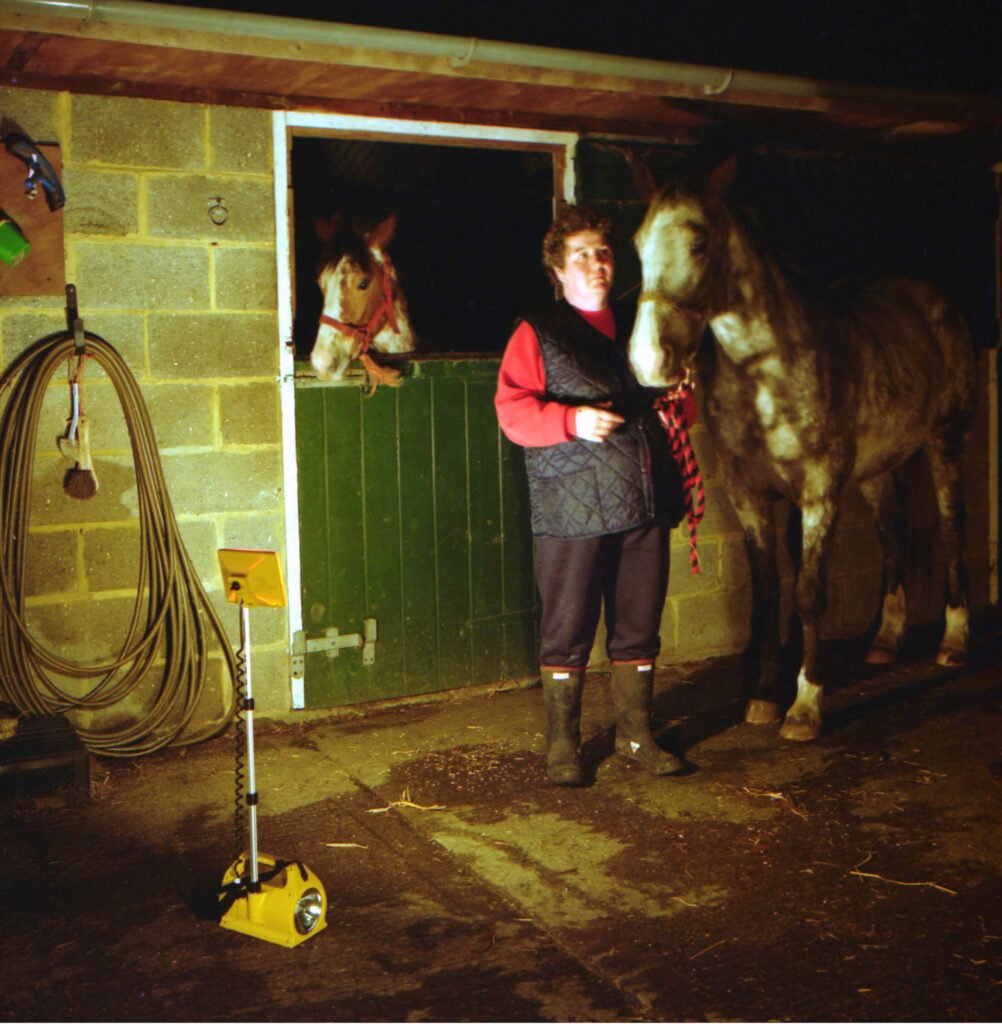
Stable Block Lighting: Positioning and Practical Setup
Getting the most from portable rechargeable lighting inside a stable block requires thinking through positioning before arriving with the equipment.
Stable aisle lighting. A single area lighting unit positioned at the end of a stable aisle and elevated on its stand illuminates the full length from one position. The ALU2000Li provides the output to cover a standard stable aisle clearly from a single unit, with the runtime to cover an extended morning routine including multiple feeds and water checks.
Individual stable illumination. For inspecting a specific horse, treating an injury, or providing clear light for a vet or farrier, a compact portable floodlight positioned inside or directly outside the stable door provides focused, close-range illumination that serves the task better than a general aisle light.
Tack room and feed room. Practical work in tack rooms and feed rooms (preparing feeds, cleaning equipment, sorting rugs) benefits from a fixed overhead-style light source. A compact rechargeable floodlight hung from a beam or positioned on a shelf provides this without requiring a mains connection.
Outdoor yard areas. Water troughs, muck heaps, trailer parking, and yard gates all sit outside the stable block and frequently in complete darkness. A portable rechargeable floodlight positioned at key points during the feed and check routine covers these areas without any infrastructure requirement.
Outdoor Stable Lights and Yard Lighting Without Electricity
Many yards have outdoor stable blocks, field shelters, or stable conversions where mains electricity has never been installed. Running a power supply to these structures is a significant cost and disruption. For owners who need lighting now rather than after a building project, battery-powered solutions provide an immediate answer.
The key specifications for outdoor stable lighting without electricity:
IP65 minimum. Outdoor stables, field shelters, and yard areas expose equipment to rain, mud, and moisture regularly. IP65-rated equipment withstands these conditions reliably across a full season of outdoor use.
Sufficient runtime for the daily routine. Morning and evening feeds plus evening checks may total two to three hours of lighting use daily. Equipment rated for 6 to 10 hours at working output provides several days of use between charges for this kind of routine deployment.
Durable construction. Horses investigate unfamiliar objects. Equipment positioned within reach should be in robust housing that survives contact. Positioning lights out of direct reach (hung from a beam, placed on a shelf, or on a stand in the aisle rather than in the stable) is the more practical approach regardless of equipment durability.
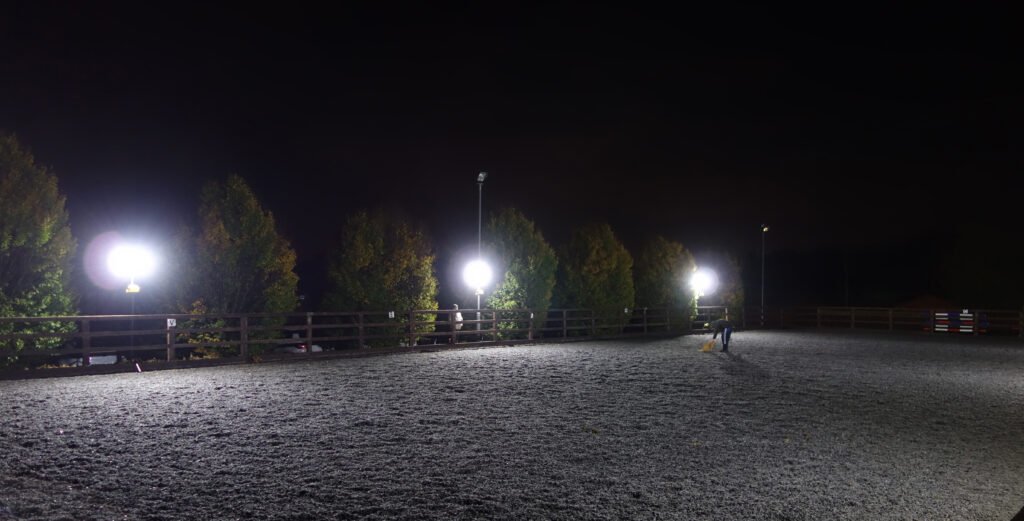
Which Samalite Products Suit Stable and Yard Use
Samalite’s portable floodlight range maps directly to the main stable and yard lighting requirements.
ALU2000Li – Stable Aisle and Large Area Lighting
The ALU2000Li is the most practical unit for illuminating a full stable aisle or outdoor yard area from a single position. High output, rechargeable, and elevated on its telescopic mast to distribute light evenly across a wide area.
For yards with a central aisle layout, one ALU2000Li positioned at the end of the aisle covers the full length for morning and evening feeds. For outdoor yard areas, it provides the area coverage that individual compact floodlights cannot match from a single unit.
ALU4000Li – Larger Yards and Foaling Watch
The ALU4000Li delivers higher output suited to larger stable blocks, covered yards, or situations requiring sustained bright illumination – foaling watch in particular, where visibility needs to be genuinely good rather than just adequate throughout an extended watch.
For yards with multiple aisles, two ALU4000Li units cover the full facility from end positions without any additional equipment.
Eco-Flood Range – Portable Stable and Task Lighting
The Eco-Flood range provides compact, portable units suited to individual stable lighting, veterinary and farrier visits, and any task requiring repositionable close-range illumination. Lighter and more compact than the ALU units, they carry easily through a stable block during a feed round.
For solo yard managers carrying a light from stable to stable, the Eco-Flood format is the most practical daily-use option.
Head Torches for Hands-Free Yard Work
A rechargeable head torch worn during feeds and checks keeps both hands free throughout the yard routine. For yard managers doing everything themselves (carrying buckets, filling haynets, opening bolts, checking rugs) hands-free illumination that follows their line of sight is more practical than any carried or positioned light.
The HL600W provides wide beam illumination suited to stable and yard use – broad enough to provide ambient awareness while moving through the yard, with enough output to see clearly inside a stable interior. For yard managers who also do their own basic veterinary wound checks, the HL600F adds flood beam capability for close, even illumination of a specific area.
Runtime Planning for Stable Lighting
Working out how often equipment needs charging prevents the frustration of a flat battery at 6am on a January morning.
Typical daily usage for a private yard:
- Morning feeds and checks: 45 to 90 minutes
- Evening feeds and checks: 45 to 90 minutes
- Total daily use: 1.5 to 3 hours
An area lighting unit rated for 6 to 10 hours at working output provides two to six days of use between charges on this kind of routine. A simple weekly charging schedule (plug in every Sunday, for example) maintains readiness without requiring thought.
For yards with more intensive routines or larger numbers of horses, calculate total daily use time and divide the unit’s rated runtime to determine charge frequency. Build in a margin for cold winter temperatures, which reduce lithium-ion battery capacity by 10 to 20 percent depending on conditions.
Charge units inside a tack room, feed room, or house – anywhere with a mains socket and shelter from the elements. USB-C charging means any standard phone charger or multi-port USB hub manages the equipment without needing specialist chargers.
Frequently Asked Questions
Rechargeable battery-powered LED floodlights are the most practical solution for stables and yards without mains electricity. They require no cables or generator supply, operate silently so as not to disturb horses, produce zero emissions for safe use in enclosed stables, and deploy in seconds. The Eco-Flood range suits portable daily use, while the ALU area lighting units provide higher output for illuminating full stable aisles and yards from a single position.
Yes. Quality LED lighting is the safest format for stable use. LED lights produce minimal heat compared to halogen or incandescent alternatives, reducing fire risk near bedding and hay. Battery-powered LED lights produce no emissions, making them safe in enclosed stables where ventilation is limited. They are also inherently flicker-free, which is important in equine environments as horses are sensitive to light flicker that can cause anxiety.
Runtime depends on the model and output setting. For typical stable use (morning and evening feeds totalling two to three hours daily) an area lighting unit rated for 6 to 10 hours at working brightness provides two to four days of use between charges. Weekly charging is sufficient for most private yard routines. Cold temperatures in winter reduce lithium-ion battery capacity, so build a small margin into runtime planning during the coldest months.
Yes. Battery-powered portable LED floodlights are appropriate for indoor stable use. They produce no fumes, generate minimal heat, and can be positioned or repositioned without any infrastructure. Place them in the stable aisle rather than inside individual stables where possible – aisle positioning illuminates multiple stalls and keeps equipment out of reach of horses.
Foaling watch requires reliable, bright illumination sustained for several hours at a time. The ALU4000Li provides high-output area lighting suited to illuminating a foaling stable clearly for an extended watch. Carry a second charged unit as a backup – the runtime requirements of an overnight foaling watch are unpredictable, and having a spare prevents being without light at a critical moment.
Portable rechargeable LED floodlights eliminate the need for ground-level cables entirely. Position units at key points (stable aisle entrance, outdoor water area, yard gate) during the feed and check routine, then collect them afterwards. For areas used consistently, a unit with a stand or hanging point stays in position throughout the evening without any cable management. The Ultralight range is particularly suited to yards where the light needs to travel between multiple locations during a single routine.
Most horses habituate quickly to a new light source if it is introduced calmly. The factors that cause problems in equine environments (generator noise, light flicker, sudden bright spots in otherwise dark spaces) are absent from quality rechargeable LED lighting. Silent operation and flicker-free output address the two most common sources of lighting-related stress in horses. Introduce new lighting during a quiet period and allow horses to investigate before using it routinely, particularly in individual stables.