
The beam type of a head torch determines what it is actually useful for. Output in lumens gets most of the attention, but two head torches with identical lumen ratings and different beam types will perform completely differently on the same task.
Get the beam type right and a moderate-output torch outperforms a powerful one specified incorrectly. Get it wrong and you are working against your own light – dealing with glare in a confined space, or struggling to see at range with a beam that spreads too wide to carry intensity.
This guide explains what each beam type does, which tasks each one suits, and which Samalite head torch is the right match for your application.
What the Three Beam Types Actually Mean
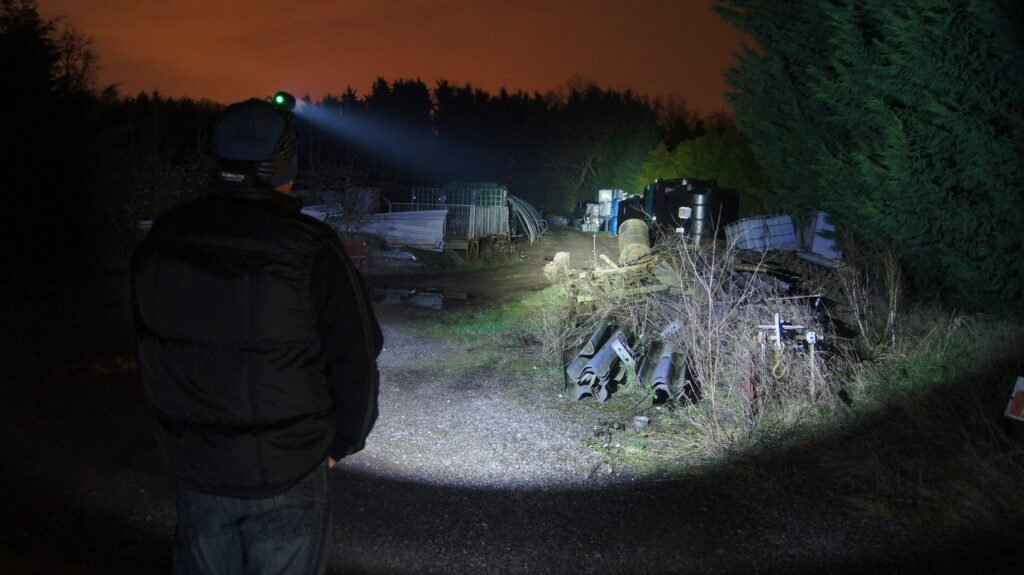
Wide beam distributes light across a broad horizontal arc – typically 100 to 180 degrees. It illuminates the peripheral field as well as directly ahead, providing awareness of the surrounding area rather than just a central lit zone. The trade-off is intensity: spreading output across a wider angle reduces brightness in any one direction.
Flood beam delivers a broad, even spread of light at closer range. Less angular spread than a true wide beam, but very even distribution without a hot central spot. The most effective beam type for close, detailed work where you need consistent illumination across a surface without shadows or contrast.
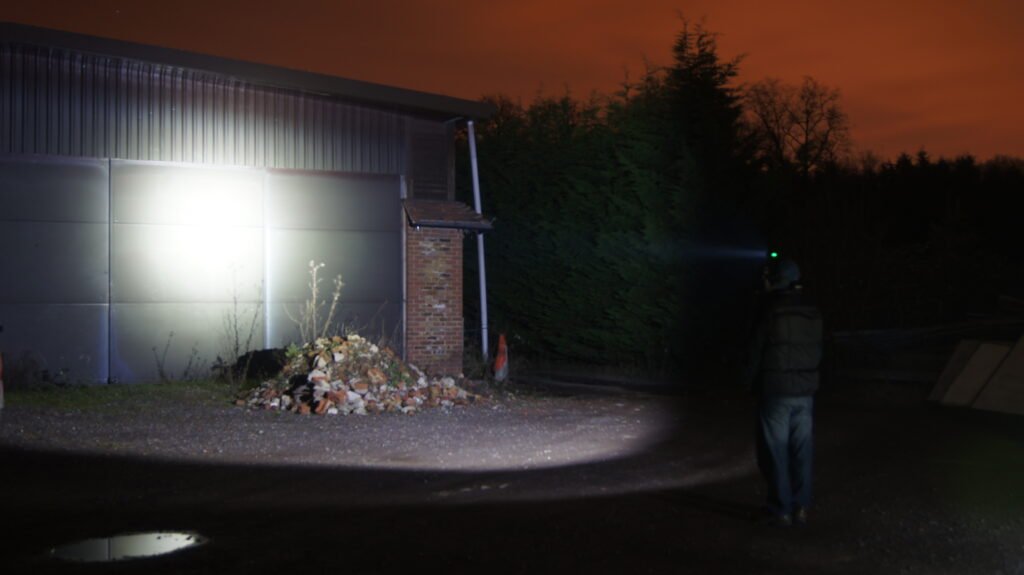
Spot beam concentrates output into a narrow, focused projection. Maximum intensity in a single direction, maximum reach. The right choice when you need to see something at distance, navigate in complete darkness, or project light into a deep or narrow space.
These are not three versions of the same thing at different intensities. They are fundamentally different tools that happen to be delivered in the same format.
Wide Beam Head Torches: When Peripheral Awareness Matters
A wide beam head torch illuminates your environment, not just what you are directly looking at. The broad spread creates a field of visible light that includes your hands, nearby surfaces, and the space around the immediate task.
This makes wide beam head torches particularly suited to:
Moving through complex environments. Underground, on site at night, or in any environment where awareness of obstacles around you matters as much as seeing what is directly ahead. A spot beam in these conditions creates a lit tunnel surrounded by darkness – effective for what is in front, but leaving the sides invisible.
Working in teams. When multiple people are working in the same area, wide beam illumination reduces the risk of one person’s head torch blinding another. The lower peak intensity of a wide beam is easier for colleagues to work around.
General site navigation and supervision. Site managers, supervisors, and anyone moving continuously through a work environment benefit from the ambient awareness a wide beam provides.
Outdoor and open environments. Walking across a site, managing access routes, or overseeing a large area all benefit from peripheral light coverage that a spot beam cannot deliver.
The HL600W delivers 2,500 lumens in a wide beam configuration – effective ambient site illumination with the output to perform in full outdoor darkness. The HL1300W steps up to 4,100 lumens in the same wide beam format, making it the high-output option for demanding outdoor environments, extended night shifts, and supervisors who need strong peripheral illumination across larger areas.
Flood Beam Head Torches: The Right Choice for Close Work
Flood beam is the most misunderstood of the three types. People instinctively reach for higher output when tasks feel difficult, but for close, detailed work, the problem is usually beam quality rather than brightness.
A flood beam delivers even, shadow-free illumination across a surface. There is no central hot-spot, no harsh contrast at the edges, and no glare bouncing off reflective surfaces back at the user. For tasks where you need to actually see fine detail clearly, this even distribution matters more than raw lumen count.
Flood beam head torches are the correct specification for:
Electrical and wiring work. Panel interiors, distribution boards, and cable runs need even illumination without the contrast that a spot beam creates in an enclosed space. Identifying wire colours, reading labels, and working on components all benefit from a smooth flood beam.
Confined space inspection. Glare bouncing off close walls, ceilings, and floors in a tight space is a real problem with spot beams. A flood beam minimises this effect.
Plumbing and heating work. Boiler cupboards, plant rooms, and ceiling voids are the standard working environment for this trade. Even, close-range illumination suits them directly.
Any task where both hands are on the work. When precision matters and you cannot afford to be distracted by adjusting the light, even flood illumination lets you focus entirely on the task.
The HL3XF is Samalite’s dedicated high-output flood beam head torch. At 3,600 lumens with up to 29 hours of runtime on the powerbelt configuration, it delivers powerful, even flood illumination across a full shift and well beyond. It is the choice for trades who know their primary environment is close, detailed work and want the output and runtime to match.
Spot Beam Head Torches: Distance, Reach, and Penetration
A spot beam concentrates the full output of the torch into the smallest possible projected angle. This does one thing extremely well: it reaches further than any equivalent flood or wide beam torch.
The applications that need this are specific, but where they apply, nothing else will do.
Railway and trackside inspection. Looking along a section of track, checking signal positions, or assessing conditions ahead – all of these require seeing clearly at distance in full darkness. A wide or flood beam cannot provide this.
Search and assessment at distance. Emergency responders, security operatives, and anyone arriving at an unlit incident scene needs to see across the area before moving into it. A spot beam provides this capability from a handheld personal torch.
Navigating long, narrow spaces. Tunnels, ducts, cable runs, and any deep or elongated structure benefit from a beam that projects its intensity as far as possible rather than spreading it wide.
Long-range inspection of structures. Checking elevated areas, far ends of structures, or distant access points from a fixed position – all require reach rather than spread.
Interchangeable Beam: When You Need Both
Some professional applications require more than one beam type across a single shift. An emergency responder needs a spot beam to assess a scene on arrival and a flood beam to work on the task. A maintenance engineer may need wide beam for navigation between jobs and flood beam for the work itself.
Rather than carrying two units, an interchangeable beam head torch switches between modes as the task demands.
The HL600F is built specifically for this. At 3,600 lumens with interchangeable spot and flood beam configurations and up to 29 hours of runtime on the powerbelt, it covers the full range of professional lighting requirements from a single unit. Switch between beam types as the task changes without changing equipment.
For professionals whose work does not stay in one environment or one task type throughout a shift, the HL600F is the most practically versatile unit in the Samalite range.
Choosing by Task: A Practical Reference
| Task or Environment | Best Beam Type | Recommended Model |
|---|---|---|
| Electrical and wiring work | Flood | HL3XF |
| Panel and component inspection | Flood | HL3XF |
| Plumbing and heating work | Flood | HL3XF |
| Confined space entry | Flood | HL3XF |
| General site navigation | Wide | HL600W or HL1300W |
| Site supervision and management | Wide | HL1300W |
| Working in teams | Wide | HL600W or HL1300W |
| Railway and trackside inspection | Spot | HL600F (spot mode) |
| Emergency scene assessment | Spot then flood | HL600F |
| Multi-task professional use | Interchangeable | HL600F |
| High-output outdoor night work | Wide | HL1300W |
| Extended shift, close work | Flood | HL3XF with powerbelt |
Output and Runtime: What the Numbers Mean for Each Beam Type
A common point of confusion: the same lumen figure from a flood beam and a spot beam does not produce the same visible result at distance.
Lumens measure total output regardless of direction. A flood beam spreads those lumens broadly – high visibility close up, lower intensity at range. A spot beam concentrates the same lumens into a narrow angle – the centre of the beam at distance is significantly brighter than any flood configuration at the same lumen rating.
This is why lumen count alone does not determine which torch is most suitable. The HL1300W at 4,100 lumens in wide beam produces excellent ambient site illumination but would not outperform the HL600F in spot mode at range. They serve different purposes and the lumen figures reflect output, not suitability for a specific task.
Runtime is affected by output mode. Running at maximum lumens reduces runtime. All Samalite head torches include multiple brightness levels – using a lower setting for close work where full output is unnecessary extends runtime significantly across a shift.
Powerbelt Configurations and Docking
For high-output professional use across extended shifts, a powerbelt battery configuration addresses the two constraints that head-mounted batteries cannot resolve simultaneously: weight on the head and total runtime.
The HL3XF and HL600F both operate on powerbelt configurations, moving the battery pack from the head to the body. This delivers two advantages:
Weight off the head. A large lithium-ion battery pack on a belt rather than the forehead eliminates accumulated neck and head fatigue across a long shift. For professionals wearing a head torch for 8 to 12 hours, this is not a minor comfort consideration – it affects sustained performance.
Higher total runtime. A body-worn battery pack can carry significantly more capacity than a head-mounted unit. The HL3XF and HL600F both reach up to 29 hours of runtime on the powerbelt at working output – enough for multiple full shifts on a single charge.
Samalite’s rechargeable head torches with docking station compatibility allow units to be returned to a charging dock between shifts, maintaining fleet readiness without managing individual cables across a team. For site managers specifying equipment for multiple operatives, a docking system simplifies charging discipline – units go back to the dock after each shift automatically rather than requiring individual attention.
For teams that need both high sustained output and long runtime, the powerbelt and docking configuration is the correct specification, not a premium add-on.
Frequently Asked Questions
Wide beam spreads light across a broad horizontal arc of typically 100 to 180 degrees, providing ambient peripheral illumination and awareness of the surrounding environment. Flood beam delivers even, shadow-free illumination at closer range without the extreme angular spread of a true wide beam. Wide beam suits navigation, open environments, and team working. Flood beam suits close task work, panel inspection, and confined spaces where even, glare-free light matters more than peripheral awareness.
Flood beam. Electrical work requires even, shadow-free illumination at close range that allows clear visibility of components, wire colours, and labels without glare or harsh contrast. A spot beam in a panel or distribution board creates a bright central hot-spot surrounded by relative darkness – the opposite of what the task needs. The HL3XF is the correct specification for electricians.
The HL1300W delivers 4,100 lumens in a wide beam configuration – the highest output wide-beam unit in the range. The HL600F and HL3XF both deliver 3,600 lumens with up to 29 hours of runtime on the powerbelt. The most powerful option for your application depends on which beam type suits your task – more lumens in the wrong beam type will not improve performance.
A wide beam head torch illuminates the peripheral field – the area to the sides and around the immediate focal point. This provides awareness of the surrounding environment, reduces the risk of blinding colleagues working nearby, and suits any application where moving through a complex space or maintaining situational awareness matters. A spot beam provides none of this peripheral illumination, focusing all output in a single direction.
A rechargeable head torch with docking station compatibility returns to a charging dock between uses rather than requiring individual cable charging. The unit sits in the dock after each shift and charges automatically. For professional teams managing multiple units across a fleet, docking systems simplify charging discipline and ensure every torch is ready for the next deployment without requiring manual tracking of individual units. The Samalite powerbelt models support this configuration.
Flood beam for confined spaces. Spot beams in enclosed, reflective environments create intense glare bouncing off close surfaces, which reduces visibility rather than improving it. The even, lower-intensity distribution of a flood beam suits confined spaces directly – consistent illumination without the contrast and reflection problems that a concentrated spot creates. For confined spaces with potentially explosive atmospheres, ensure equipment carries appropriate ATEX certification regardless of beam type.
Yes, with the right model. The HL600F offers interchangeable spot and flood beam configurations, covering both close detailed work and long-range projection from a single unit. For professionals working across varied environments and task types throughout a shift, this versatility removes the need to carry separate equipment for different beam requirements. Browse the full Samalite head torch range for a direct comparison across all models.