
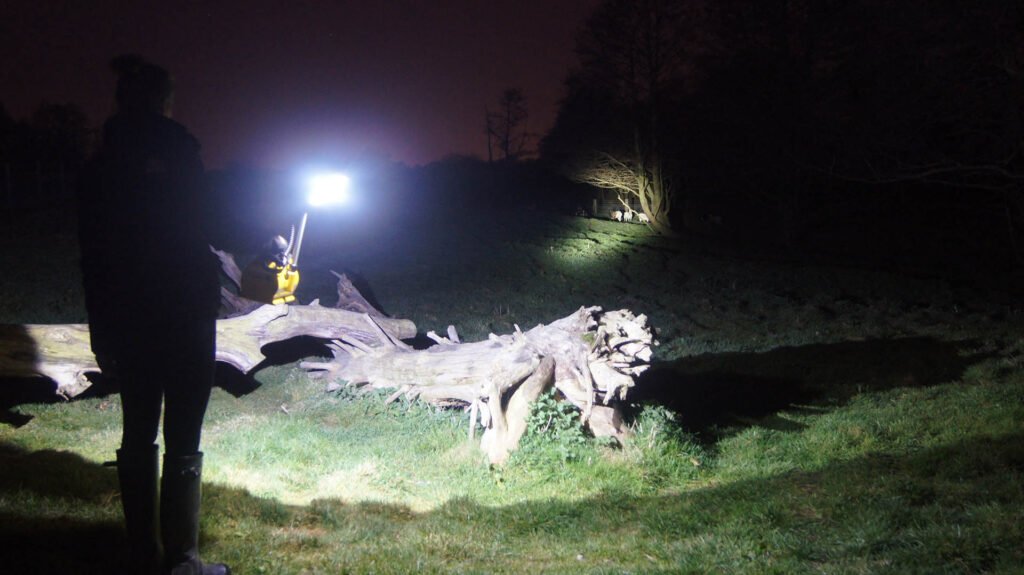
A portable rechargeable floodlight is a battery-powered LED light designed to illuminate a broad area without mains power or generator supply. Unlike a torch or head torch, which project directional beams, a floodlight distributes light across a wide angle – lighting up a workspace, a site area, or an outdoor environment rather than pointing at a single spot.
Rechargeable battery technology has made portable floodlights a genuine alternative to mains-connected and generator-powered lighting for most professional and outdoor applications. This guide covers every specification that matters, the different formats available, and how to match the right product to your use case.
What Makes a Floodlight “Portable”?
Portable means self-contained. A portable rechargeable floodlight carries its own power supply, requires no cables or generator connection, and can be positioned anywhere and switched on immediately.
In practice this means:
- No cable management across a work area or pitch
- No generator setup, fuelling, or noise
- Deployment in seconds rather than minutes
- Repositioning without shutting anything down or moving infrastructure
For construction sites, maintenance teams, emergency responders, sports clubs, equestrian facilities, and anyone working in locations without power supply, this operational freedom is the core value of the format.
Key Specifications Explained
Lumen Output
Lumens measure total light output. For floodlights, the relevant figure is how much light reaches the area being illuminated – which depends on both output and beam angle.
A wide-beam floodlight at 2000 lumens illuminates a larger area than a narrow-beam unit at the same output, but with lower intensity across that area. For general workspace illumination, broad beam spread is usually preferable. For task lighting of a specific area, a more focused beam delivers better results.
Practical output guidance by application:
| Application | Recommended Output |
|---|---|
| Single-person task lighting indoors | 1000 to 2000 lumens |
| Small outdoor work area | 2000 to 4000 lumens |
| Construction task zone | 3000 to 6000 lumens |
| Sports training area (per unit) | 2000 to 4000 lumens |
| Large site area or multi-person task | 4000 to 14000+ lumens |
Multiple units at lower output often deliver better coverage than one high-output unit, because light from different positions eliminates shadows that a single source creates.
IP Rating
For any floodlight used outdoors or on site, IP rating is a baseline requirement, not an optional extra.
IP65 – completely dust tight, protected against water jets from any direction. The minimum for outdoor professional and site use. Covers rain, splashing, and dusty environments reliably.
IP67 – adds temporary submersion protection to 1 metre. Worth specifying for groundworks, drainage work, or any environment with standing water.
IP68 – continuous submersion protection. Required for the most demanding wet environments.
For the majority of UK outdoor and site applications, IP65 is the correct minimum. Any rechargeable floodlight without at least IP65 should not be used outdoors in professional conditions.
Runtime
As with all rechargeable work lights, runtime quoted at maximum output differs significantly from runtime at working brightness. Manufacturers typically quote peak runtime at minimum output settings – a figure that rarely reflects real-world use.
When evaluating runtime, look for specifications at mid to high output. For a standard working shift, 6 to 10 hours at working brightness is the practical target. For sports and evening training use, 4 to 6 hours covers most sessions comfortably with charge to spare.
Cold temperatures reduce lithium-ion battery capacity. For outdoor winter use, build a margin into runtime calculations to account for reduced performance in cold conditions.
Beam Angle
Beam angle determines how wide the floodlight spreads its output. A narrow beam concentrates light more intensely at a shorter range. A wide beam covers more area with lower intensity.
Narrow (15 to 30 degrees) – focused task lighting, longer throw, higher intensity at distance. Suited to directing light at a specific area or object.
Medium (60 to 90 degrees) – general workspace illumination. The most common configuration for site and trade use.
Wide (120 degrees and above) – broad area coverage, lower intensity per square metre. Suited to sports pitches, arena lighting, and large open areas with multiple units.
Weight and Form Factor
Weight affects how the floodlight is deployed and whether it can reasonably be carried by one person across a site. Compact, lightweight units travel easily in a works van and can be positioned by a single operative. Larger area lighting units with telescopic masts deliver higher output but require more effort to deploy and carry.
For teams covering multiple locations in a shift, lighter units reduce handling burden. For fixed-position deployment on a single large task, higher output from a heavier unit is often the right trade-off.
Portable Rechargeable Floodlight Formats
The floodlight category covers a wider range of products than the name suggests. Understanding the different formats helps match the right product to the task.
Compact Portable Floodlights
The most common format for trade, site, and outdoor use. Compact units are designed to be carried in a bag or vehicle and deployed at any location. They typically sit on a fold-out stand or mount on a tripod, and provide output ranging from 1000 to 5000 lumens depending on model.
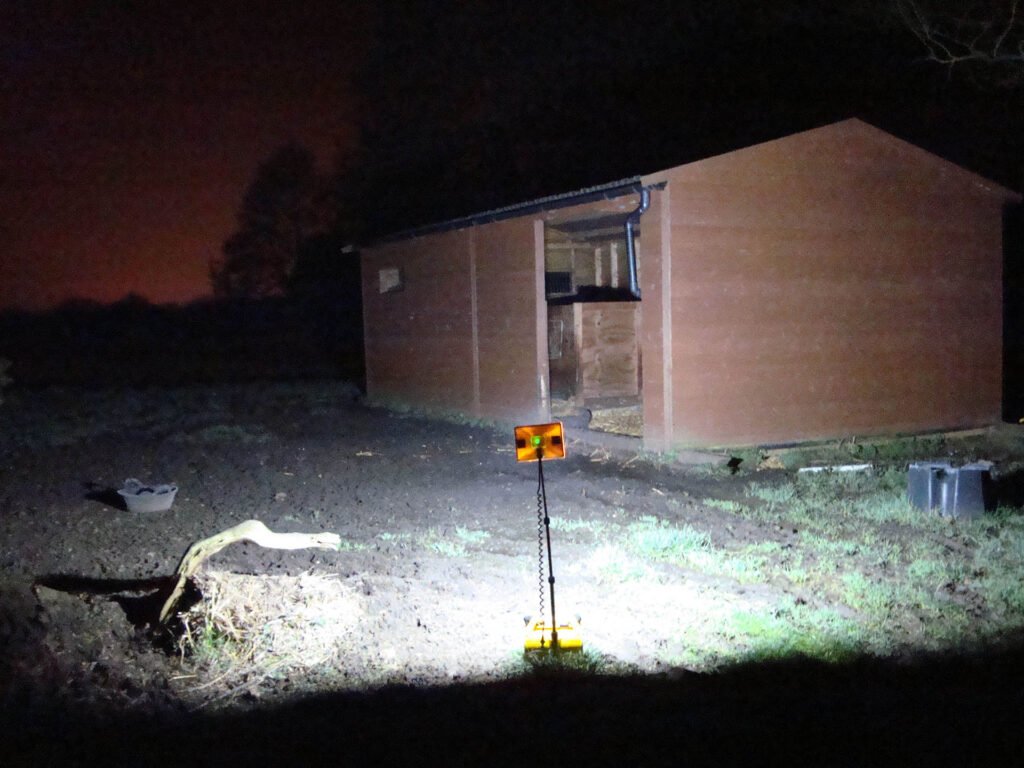
The Eco-Flood range covers this format – rechargeable, IP-rated, and built for professional use across construction, maintenance, emergency response, and outdoor applications.
Ultralight Floodlights
Purpose-built for portability above all else. Ultralight units sacrifice some output for a significantly reduced weight and size, making them the right choice for teams covering ground on foot, inspection crews moving between multiple points during a shift, and any application where carrying the equipment over distance matters.
The Ultralight 750, 1500, and 3000 provide scaled output options within the ultralight format – covering personal task lighting through to small area illumination in a format that fits easily in a backpack or tool bag.
Area Lighting Systems
For larger tasks, higher total output from a single deployable unit simplifies on-site management. Area lighting systems combine high-output LED arrays with telescopic masts that elevate the light source for wider, more even coverage across a substantial work zone.
The ALU area lighting range (including the ALU2000Li, ALU4000Li, and ALU2000/4000Li) provides mast-mounted rechargeable LED area lighting suited to construction sites, large maintenance tasks, and incident scenes requiring broad illumination from fewer units.
A single ALU unit elevated on its mast can cover an area that would otherwise require four or more compact units, reducing the total equipment needed to light a large zone.
Sports and Outdoor Activity Floodlights
Designed specifically for outdoor sports training environments – football pitches, equestrian arenas, and multi-use outdoor facilities. Output and beam spread are optimised for covering a playing area from corner positions rather than directing task-specific illumination.
The Eco-Flood Sport is built for this application, with the output and tripod-compatible mounting suited to pitch and arena use by sports clubs and equestrian facilities without permanent floodlighting infrastructure.
Power and Lighting Combination Units
The HD200 range combines a rechargeable battery power output for tools and charging with an integrated LED floodlight. For trades working in locations entirely without mains supply, the HD200 delivers both illumination and usable power from a single deployable unit.
Available in three capacities – HD200 750, HD200 1500, and HD200 3000 – to match different task durations and power demands.
Matching Format to Use Case
| Use Case | Recommended Format | Suggested Product |
|---|---|---|
| Trade task lighting, single operative | Compact portable floodlight | Eco-Flood range |
| Mobile inspection and maintenance | Ultralight floodlight | Ultralight 750 or 1500 |
| Large construction task zone | Area lighting system | ALU4000Li |
| Emergency response scene lighting | Compact portable floodlight | Eco-Flood range |
| Football training pitch | Sports floodlight x4 | Eco-Flood Sport |
| Equestrian arena (20x40m) | Sports floodlight x4 | Eco-Flood Sport |
| Off-grid site needing power and light | Power and lighting unit | HD200 1500 or 3000 |
| Large area, single deployment unit | Area lighting system | ALU2000/4000Li |
How Many Floodlights Do You Need?
One of the most common specification mistakes is under-provisioning – buying one or two high-output units when the task needs four or six positioned around the work area.
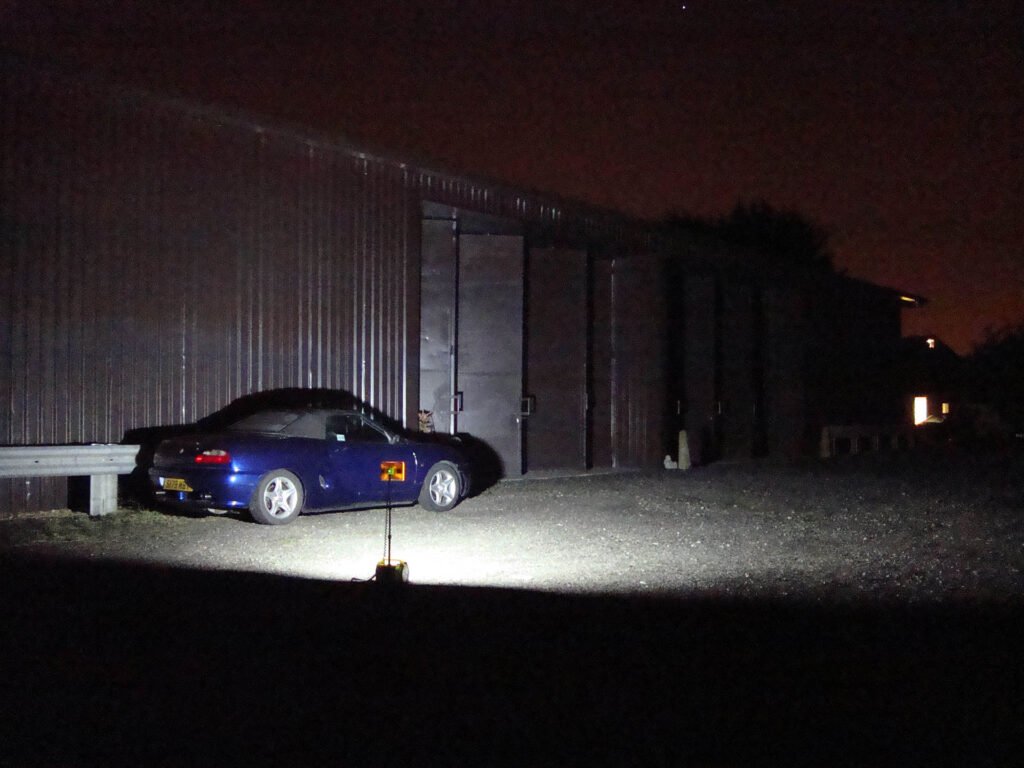
A single floodlight creates a bright zone directly in front of the unit and leaves shadows behind every object and person in the area. Multiple units positioned around the perimeter of the work zone eliminate those shadows by providing light from different angles.
As a practical guide:
- For a work area up to roughly 5×5 metres, one compact floodlight positioned correctly provides adequate coverage
- For work areas up to 10×10 metres, two units from opposite corners provides even coverage
- For a full football training pitch or equestrian arena, four to six units around the perimeter is the standard configuration
- For large construction zones, an area lighting unit on a mast or multiple compact units eliminates the shadow problem more efficiently than a single high-output source
When in doubt, more units at lower output provide better results than fewer units at maximum output.
Rechargeable Floodlights vs Generator-Powered Alternatives
Generator-powered floodlights remain appropriate in specific scenarios – very large sites running continuous multi-shift operations, or locations already committed to generator infrastructure for other equipment. For most other applications, rechargeable battery floodlights outperform them on every practical dimension.
| Factor | Generator Floodlight | Rechargeable Floodlight |
|---|---|---|
| Deployment time | 10 to 20 minutes | Under 2 minutes |
| Location flexibility | Limited by cable reach | Fully mobile |
| Noise | High | Silent |
| Confined space use | Not suitable | Safe – zero emissions |
| Fuel management | Ongoing | None |
| Operating cost | Fuel plus maintenance | Minimal charging cost |
| Emergency readiness | Poor | Immediate |
The operational advantages of rechargeable floodlights are most pronounced for teams that move between locations, respond to unplanned situations, or work in noise-sensitive or enclosed environments. For a maintenance crew responding to an emergency callout, a sports club running a training session, or a contractor working in a basement or tunnel, rechargeable battery floodlights are not a compromise – they are the correct tool.
Caring for Rechargeable Floodlights
Getting the most from a rechargeable floodlight investment over its full service life comes down to a few consistent habits.
Charge after every use. Return units to a charging point after each deployment regardless of remaining battery level. Consistent charging discipline ensures maximum available runtime at the next use and extends overall battery life compared to running cells down fully before recharging.
Store with a partial charge. For units not in regular use, storing at 40 to 60% charge rather than fully depleted or fully charged preserves lithium-ion cell condition over longer storage periods.
Keep lenses clean. Dust, mud, and condensation on the lens reduce effective output. A quick wipe down after deployment maintains full light transmission.
Check IP seals periodically. On units used in demanding outdoor conditions, verify that seal integrity is maintained. Physical damage to housing or seals can compromise IP-rated protection.
Replace when runtime drops noticeably. Lithium-ion cells degrade over charge cycles. When a unit that previously covered a full shift starts falling short, the cells are ageing. Build replacement into procurement planning before degraded performance becomes an operational problem.
Frequently Asked Questions
A portable rechargeable floodlight is a battery-powered LED light that distributes illumination broadly across a work area without requiring mains power or generator supply. They are used across construction, maintenance, emergency response, sports, equestrian, and outdoor applications where power infrastructure is unavailable or impractical. Formats range from compact handheld units to high-output area lighting systems on telescopic masts.
Runtime depends on the model and output setting used. Professional units typically deliver 4 to 10 hours at working brightness. Maximum quoted runtimes are measured at minimum output, which is rarely the level used in practice. Always check runtime at the output level your application requires. Cold weather reduces lithium-ion battery capacity, so build in a margin for outdoor winter use.
For construction site use, IP65 rating, robust build quality, and sufficient output for the work zone are the key requirements. Compact portable units like the Eco-Flood range suit single-operative task lighting and can be repositioned as work progresses. For larger zones, the ALU area lighting range provides higher output from fewer units with telescopic mast elevation. Most construction applications benefit from a combination of both.
For single-person trade task lighting, 1000 to 2000 lumens is sufficient. Outdoor site work typically needs 2000 to 4000 lumens per unit. Sports pitches and equestrian arenas need 2000 to 4000 lumens per unit with four to six units positioned around the area. Large site tasks benefit from 4000 lumens and above. Multiple units from different positions deliver better coverage than one high-output unit, regardless of lumen count.
Yes. Battery-powered LED floodlights produce zero emissions at point of use, making them the correct and safe choice for confined space use – tunnels, basements, tanks, and enclosed structures where generator exhaust creates health hazards. For potentially explosive atmospheres, ATEX certification is required.
IP65 is the minimum for outdoor professional use. This provides complete dust protection and resistance to water jets from any direction – covering rain, splashing, and typical UK outdoor site conditions. For environments with standing water or potential submersion, IP67 provides additional protection.
A portable floodlight is typically a compact, easily carried unit providing 1000 to 5000 lumens for task and spot area lighting. An area lighting system like the ALU range combines higher output with a telescopic mast that elevates the light source for wider, more even coverage across a larger zone from a single position. Both are battery-powered and portable, but area lighting systems suit larger tasks where coverage uniformity matters more than ease of carry.
For most applications, yes. Rechargeable floodlights deploy faster, run silently, require no fuel management, and are safe for confined space use where generators are not. Generator-powered systems retain an advantage for very large sites running continuous multi-shift operations where battery runtime and recharging logistics become limiting factors. For the majority of professional applications, rechargeable battery floodlights are the more practical and cost-effective choice. Browse the full Samalite portable floodlight range for specifications across every format.