
A rechargeable work light is a portable, battery-powered LED light designed to illuminate a work area without mains power or generator supply. Electricians, mechanics, builders, plumbers, and site contractors use them for task lighting in locations where a fixed power supply is unavailable, impractical, or simply too far from the job.
The shift toward rechargeable LED work lights has been straightforward. Compared to corded alternatives, they go where the work is. Compared to generator-powered options, they set up in seconds and run silently. For most trade applications, a well-specified rechargeable work light is not a compromise – it is the better tool.
This guide covers what to look for, which specifications actually matter, and which Samalite products suit different trade applications.
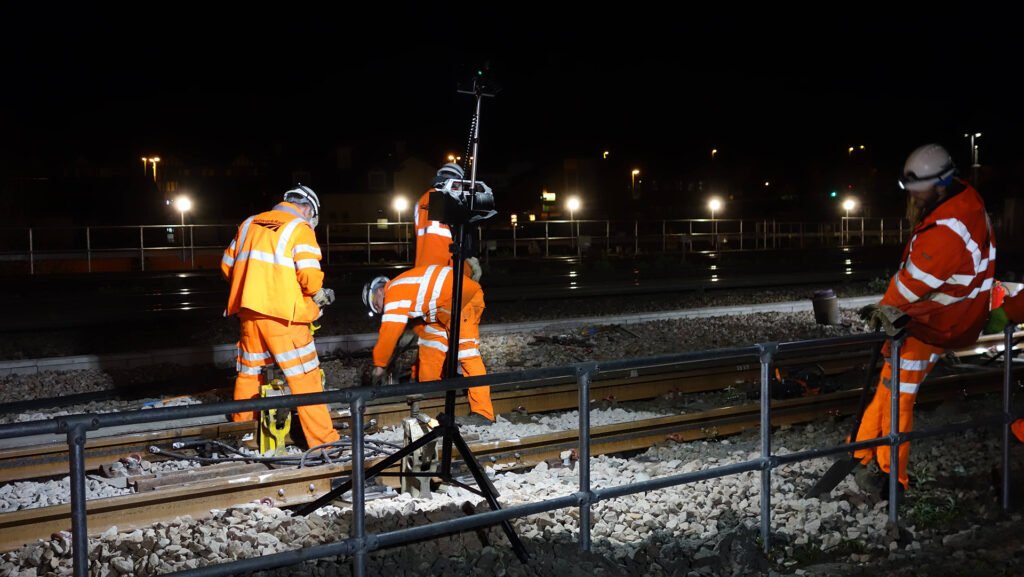
What Counts as a Rechargeable Work Light?
The term covers a wider range of products than most people expect. In practice, any rechargeable battery-powered LED used to illuminate a work area qualifies. That includes:
Compact LED floodlights – portable units with a broad beam, typically stand or surface-mounted. The most common format for general trade work lighting.
Ultralight and spot floodlights – lighter, more portable units suited to trades covering multiple locations in a single shift. Easier to carry, faster to position.
Rechargeable head torches – worn on the head or hard hat, providing hands-free personal work lighting that follows the user’s line of sight. Essential when both hands need to be free on the task.
Area lighting systems – higher output units on telescopic masts, suited to larger work areas or multi-person tasks where a single compact unit cannot cover the full zone.
Power and lighting combination units – units that provide both a power output for tools and integrated LED lighting from a single battery platform.
Most trade teams need more than one type. A compact floodlight handles general task lighting. A head torch handles close, directed work. An area light covers larger jobs. Understanding which format suits which situation is the first step in building a practical kit.
Key Specifications: What Actually Matters
Lumen Output
Lumens measure total light output. For work lighting, the right figure depends entirely on the task and the environment.
| Application | Recommended Output |
|---|---|
| Under-vehicle and confined space work | 500 to 1000 lumens |
| Electrical work, panels, and wiring | 600 to 1200 lumens |
| General trade tasks indoors | 1000 to 2000 lumens |
| Outdoor site work | 2000 to 5000 lumens |
| Large area or multi-person site tasks | 4000 lumens and above |
Higher is not always better. In confined spaces and reflective environments, excess output creates glare that reduces visibility rather than improving it. Multiple brightness levels on a single unit (typically two to four settings) give you control over this without needing separate equipment.
IP Rating
IP rating confirms environmental protection. For trade work lighting used outdoors, on site, or in wet environments, this is a non-negotiable specification.
IP44 – basic splash protection. Suitable for sheltered indoor use only. Not appropriate for site or outdoor work.
IP54 – dust and splash resistant. Minimum for general trade use.
IP65 – fully dust tight, resistant to water jets from any direction. The correct minimum for outdoor site work, construction environments, and any trade work where the light may be exposed to rain, dust, or incidental water.
IP67 – adds temporary submersion protection. Worth specifying for groundworks, drainage, and environments with standing water.
Any rechargeable work light used regularly on UK construction sites or in outdoor trade environments should be rated IP65 or above.
Runtime
Runtime at working brightness – not maximum quoted runtime at minimum setting – is the figure that matters for trade use.
Most manufacturers quote peak runtime at the lowest output level. This is often three to five times the runtime achievable at the brightness level the tool will actually be used at. Check runtime at mid to high output when comparing products.
For a standard working shift, eight hours of runtime at working brightness is the practical minimum. For longer shifts or deployments without charging access, specify accordingly or plan for a spare charged unit.
Build Quality and Weight
A work light that lives in the back of a van and gets used on site daily faces a different environment to a light used occasionally at home. Housing materials, lens quality, and general construction determine how the unit performs after six months of real trade use.
Weight matters for portable tools. A compact floodlight that stays in one position for most of the shift can afford to be heavier. A head torch worn continuously for eight hours needs to be as light as possible without sacrificing output.
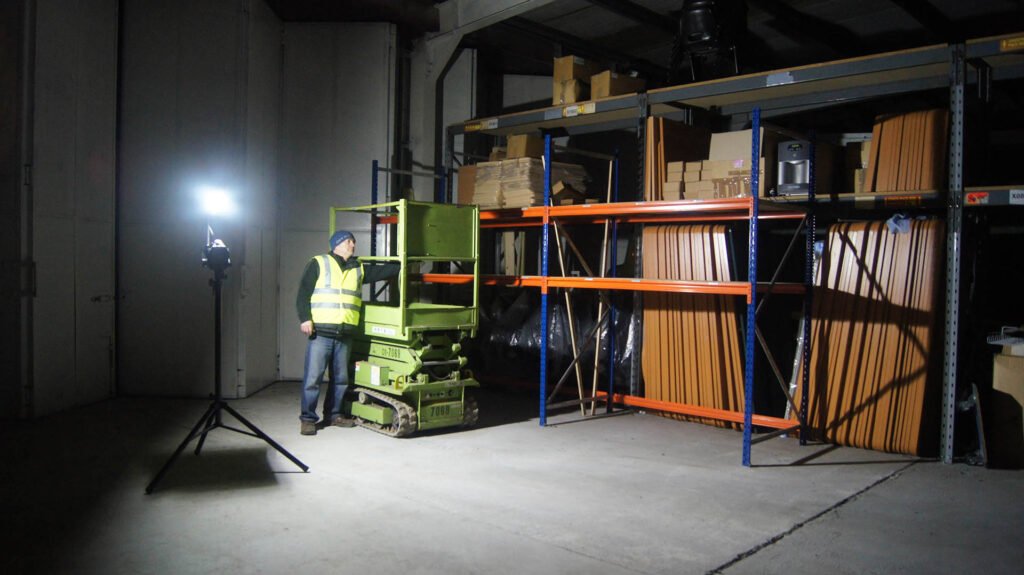
Rechargeable Work Lights by Trade Application
Electricians
Close, detailed work inside panels, distribution boards, and ceiling voids demands even, shadow-free lighting rather than raw brightness. A tight spot beam in a small space creates harsh contrast that makes it harder to see – the opposite of what the task needs.
For electrical work, a flood-beam rechargeable head torch provides hands-free illumination that follows where attention goes. The HL600F is built specifically for this: a wide flood beam at 600 lumens, compact and lightweight on a hard-hat clip or headband, with shift-length runtime.
For larger work areas (commercial electrical fit-out, plant rooms, or distribution board rooms) a compact rechargeable floodlight positioned to illuminate the wider space complements the head torch without adding a corded power dependency.
Mechanics and Vehicle Technicians
Under-vehicle and engine bay work puts particular demands on work lighting. The light needs to get into confined, awkward positions and stay there while the technician works.
Magnetic mounting is valuable here – a work light with a strong magnetic base attaches to vehicle bodywork or chassis components and holds position without occupying a hand or requiring a stand. Compact rechargeable LED floodlights with magnetic bases suit this application directly.
Head torches also play a central role for mechanics. When both hands are working on a component, a head torch provides directed illumination precisely where it is needed without the positioning constraints of a fixed light.
Builders and General Construction
Construction site work lighting needs to cover a wider range of situations than most other trades. Close task work, general area illumination, outdoor exposure, and movement between locations throughout a shift all place different demands on a work light.
The most practical approach for construction use is a layered kit: a compact rechargeable floodlight on a stand for general area lighting, and a rechargeable head torch for personal directed illumination when working on specific tasks.
The Ultralight range covers the portable floodlight requirement – high output in a lightweight, easily carried format suited to trades moving between locations during a shift. The HL1300W head torch handles the personal lighting requirement with enough output for both indoor task work and outdoor site navigation.
Plumbers and Heating Engineers
Loft spaces, under-floor voids, plant rooms, and boiler cupboards are the standard working environments for plumbing and heating work. Access is awkward, space is tight, and both hands are usually occupied.
A compact rechargeable work light that can be positioned quickly and a quality head torch for hands-free illumination cover the full range of these environments. Where work takes place in larger areas (commercial plant rooms, larger loft spaces) a compact floodlight on a stand handles general illumination while the head torch manages close work.
Site Managers and Supervisors
Site supervisors covering ground across large sites (checking progress, conducting inspections, managing evening or night-shift work) need lighting that moves with them rather than staying in one place.
A good rechargeable head torch handles this requirement. It provides continuous illumination across any location the supervisor visits without requiring any setup or positioning. For supervisors also overseeing active work zones at night, a portable floodlight provides the area coverage that a head torch alone cannot deliver.
The HL3000W suits site supervision use – enough output for outdoor movement across an unlit site, adjustable beam for switching between navigation and close inspection, and the runtime to cover an extended shift.
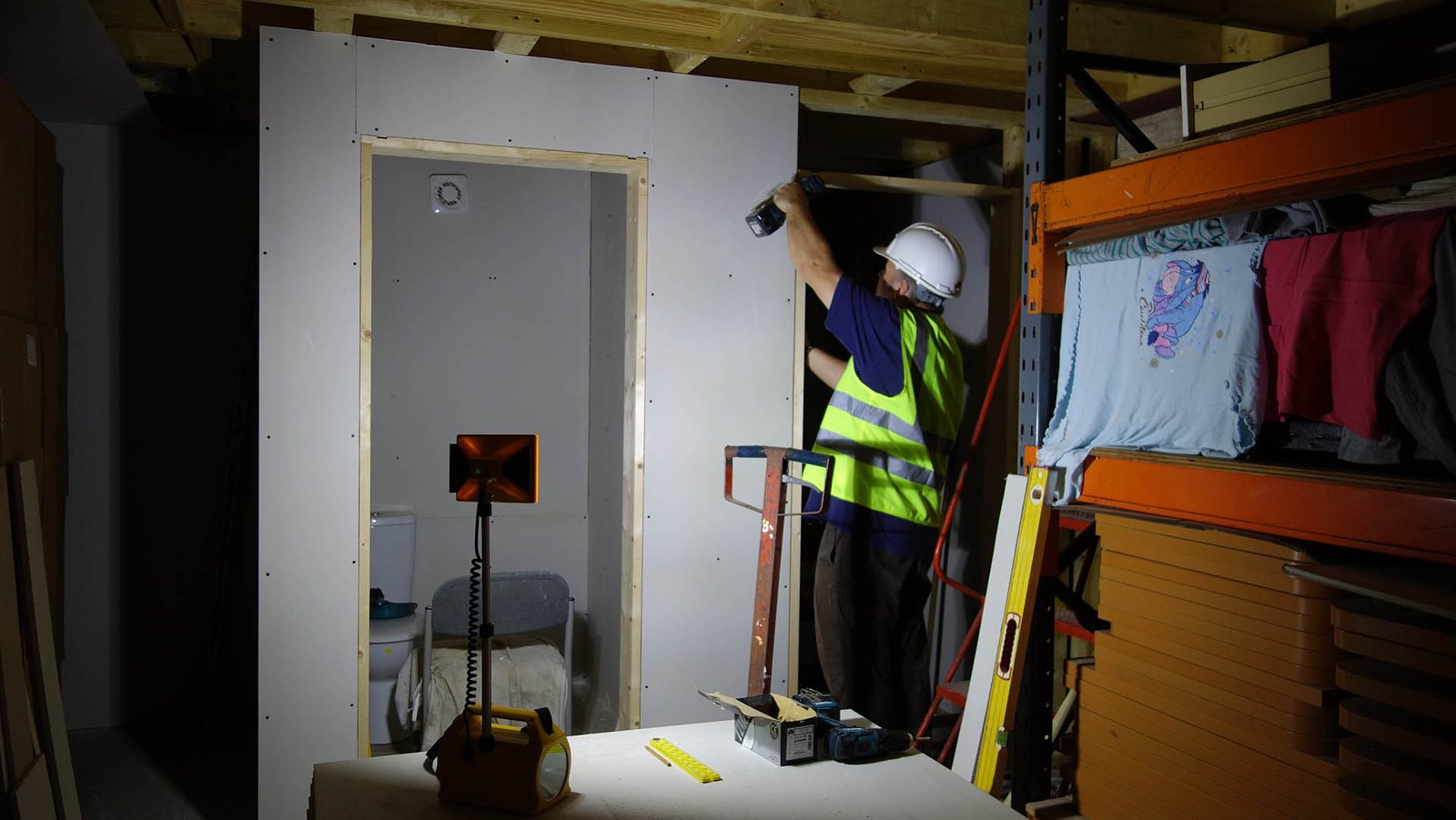
The HD200: When You Need Power and Light Together
Some trade applications need both a light source and a power output for tools or charging from a single deployable unit. The HD200 Power and Lighting range addresses this directly – a combined battery power unit and LED floodlight in one portable package.
For trades working in locations without any mains supply – remote sites, off-grid locations, or situations where running a generator for a single power tool is disproportionate – the HD200 provides both illumination and usable power output from a single rechargeable unit.
The HD200 750, HD200 1500, and HD200 3000 offer different capacity and output levels to suit different task durations and power demands.
Building a Practical Trade Work Lighting Kit
Most trade professionals do not need to choose between a head torch and a floodlight. They need both, deployed appropriately for the task.
A practical starting kit for most trades:
- 1x compact rechargeable LED floodlight with stand for general task area illumination
- 1x rechargeable head torch for hands-free personal lighting
- Charged spare battery or second unit for extended deployments
Standardising on USB-C charging across the kit simplifies charging infrastructure – a single multi-port USB-C charger in the van covers all equipment without managing multiple proprietary chargers.
For teams operating across multiple locations simultaneously, standardise equipment across vehicles. Consistent kit means consistent performance expectations, simpler training, and interchangeable spares.
Rechargeable vs Corded Work Lights
Corded work lights are not obsolete – on a fixed work bench or in a workshop with accessible mains sockets, a corded light is straightforward and cost-effective. But for trade use in the field, the constraints of a cord create practical problems that rechargeable battery lights remove entirely.
| Factor | Corded Work Light | Rechargeable Work Light |
|---|---|---|
| Location flexibility | Limited to cable reach | Fully mobile |
| Setup time | Requires power source location | Immediate |
| Trip hazard | Cable across work area | None |
| Outdoor and off-grid use | Not practical | No dependency |
| Runtime | Unlimited while plugged in | 4 to 12+ hours per charge |
| Weight and portability | Cable adds bulk | Self-contained |
For the majority of trade field work, rechargeable LED work lights are the more practical tool. Corded alternatives retain an advantage only where the work is consistently in one fixed location with mains access nearby.
Frequently Asked Questions
A rechargeable work light is a portable, battery-powered LED light used to illuminate a work area without mains power or generator supply. They are used by electricians, mechanics, plumbers, builders, and site contractors for task lighting in locations where fixed power is unavailable or impractical. Formats include compact floodlights, area lighting systems, and rechargeable head torches.
Runtime depends on output level and battery capacity. Professional trade units typically deliver 4 to 10 hours at working brightness. Always check runtime at mid to high output – maximum quoted runtimes are measured at minimum brightness settings, which are often too low for practical work use. For shift-length coverage, aim for 8 hours minimum at working output.
IP65 is the minimum for outdoor and construction site use. This provides complete dust protection and resistance to water jets from any direction – appropriate for UK outdoor conditions, wet environments, and dusty construction sites. For groundworks or environments with standing water, IP67 adds protection against temporary submersion.
Yes. Battery-powered LED work lights produce no emissions at point of use, making them safe for confined spaces where generator or combustion-powered lighting would be hazardous. For potentially explosive atmospheres (petrochemical, gas, or similar environments) ensure the equipment carries ATEX certification.
For electrical work, a flood-beam rechargeable head torch is the most practical primary tool. Even, shadow-free illumination at close range with hands-free operation suits panel work, wiring, and component work directly. The HL600F is built specifically for close trade work with a wide flood beam and hard-hat compatibility. A compact rechargeable floodlight complements it for larger work areas.
The terms overlap significantly. A rechargeable floodlight is a type of rechargeable work light – specifically one that delivers a broad, wide-angle beam for area illumination. The broader category of rechargeable work lights includes head torches, compact task lights, and area lighting systems. For trade and site use, the most practical kits combine a floodlight for general area coverage with a head torch for personal directed illumination.
Yes, for field work. The combination of instant deployment, location independence, and no trailing cables makes rechargeable LED work lights more practical than corded alternatives for most trade field applications. Over a typical use cycle, the absence of cable wear, the reduced trip hazard risk, and the time saved on setup and repositioning represent genuine operational value. View the full Samalite floodlights and head torches ranges for trade-specific specifications.