
If you are specifying head torches for a trade team, the consumer market is not where you should be looking.
Retail head torches are designed for camping, running, and occasional DIY use. They are not built for full shifts, hard-hat mounting, IP-rated outdoor exposure, or the output demands of electrical, maintenance, and industrial work. Buying them for professional teams means replacing them regularly and compromising on performance in the meantime.
This guide is written for site managers, electrical contractors, and maintenance leads who need to make the right call on professional head torches for working teams – and understand why the specification decisions matter.
Hard-Hat Compatibility: Why It Matters and What to Check
On most professional sites, PPE is not optional. A head torch that cannot be used with a hard hat is not a head torch for site work.
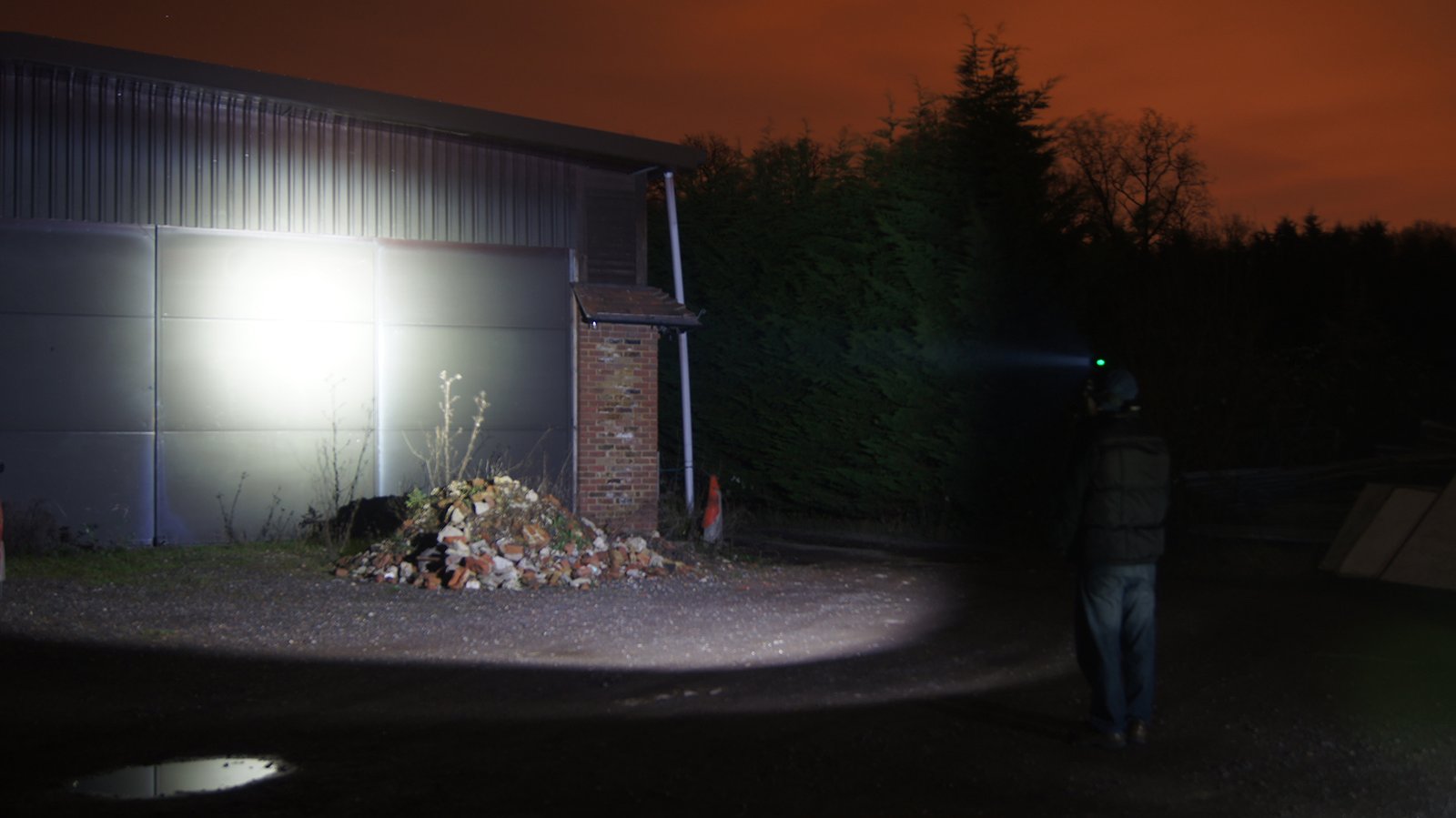
Hard-hat compatible industrial head torches mount to the front brim of a helmet via integrated clips designed to fit standard safety helmet profiles. The torch attaches securely without interfering with the helmet’s protective function and without requiring the user to remove their hard hat to adjust or recharge the light.
What to check when specifying for hard-hat use:
- Clip compatibility – standard clip systems fit most EN397 hard hats. Verify against the helmets your teams use.
- Weight distribution – heavier torch heads mounted to a helmet brim create forward imbalance. Units with separate battery packs (worn on a headband or powerbelt) move weight off the head entirely.
- Profile clearance – low-profile torch heads sit closer to the brim and reduce the chance of snagging on overhead obstructions in confined spaces.
If your teams work in both hard-hat and non-PPE environments, look for a unit that functions on a standard headband as well as a helmet mount.
IP Ratings Explained for Site Use
IP rating is a standardised measure of protection against dust and water ingress. For any head torch used on a professional outdoor or industrial site, this specification is not a nice-to-have.
IP65 is the minimum worth specifying for professional work. This means complete protection against dust ingress and resistance to water jets from any direction. It covers rain, splashing, and the kind of incidental water exposure that site work involves routinely.
IP67 adds protection against temporary submersion up to one metre. Relevant for teams working in drainage, groundworks, or environments with standing water.
IP68 covers continuous submersion and suits the most demanding environments.
For electrical contractors, maintenance crews, and construction site teams working outdoors in the UK, IP65 is the practical baseline. Specifying below this for field teams is a false economy – units will fail earlier, and replacing them costs more than the saving on purchase price.
Lumen Requirements by Task Type
More lumens is not always better. The right output depends on the task.
High-output beams in confined or reflective spaces create glare that reduces visibility rather than improving it. Focused, moderate-output flood beams serve close inspection and electrical work far better than maximum-lumen spot beams.
| Task Type | Recommended Output | Beam Type |
|---|---|---|
| Electrical and wiring work | 300 to 600 lumens | Flood – even, close-range coverage |
| General maintenance and repair | 600 to 1000 lumens | Flood or adjustable |
| Confined space inspection | 300 to 600 lumens | Flood – low glare off surfaces |
| Outdoor site work and navigation | 1000 to 1500 lumens | Spot or adjustable |
| Railway and trackside inspection | 1500 lumens and above | Spot – long-range throw along track |
| Emergency response | 1500 to 3000 lumens | Adjustable – scene assessment to close work |
The practical answer for most professional teams is a head torch with multiple output levels. A unit that runs 600 lumens for close electrical work and steps up to 1500 lumens for outdoor navigation covers both without compromise.
Runtime: What Full-Shift Coverage Actually Requires
Shift-length runtime is where consumer-grade head torches consistently fall short for professional use.
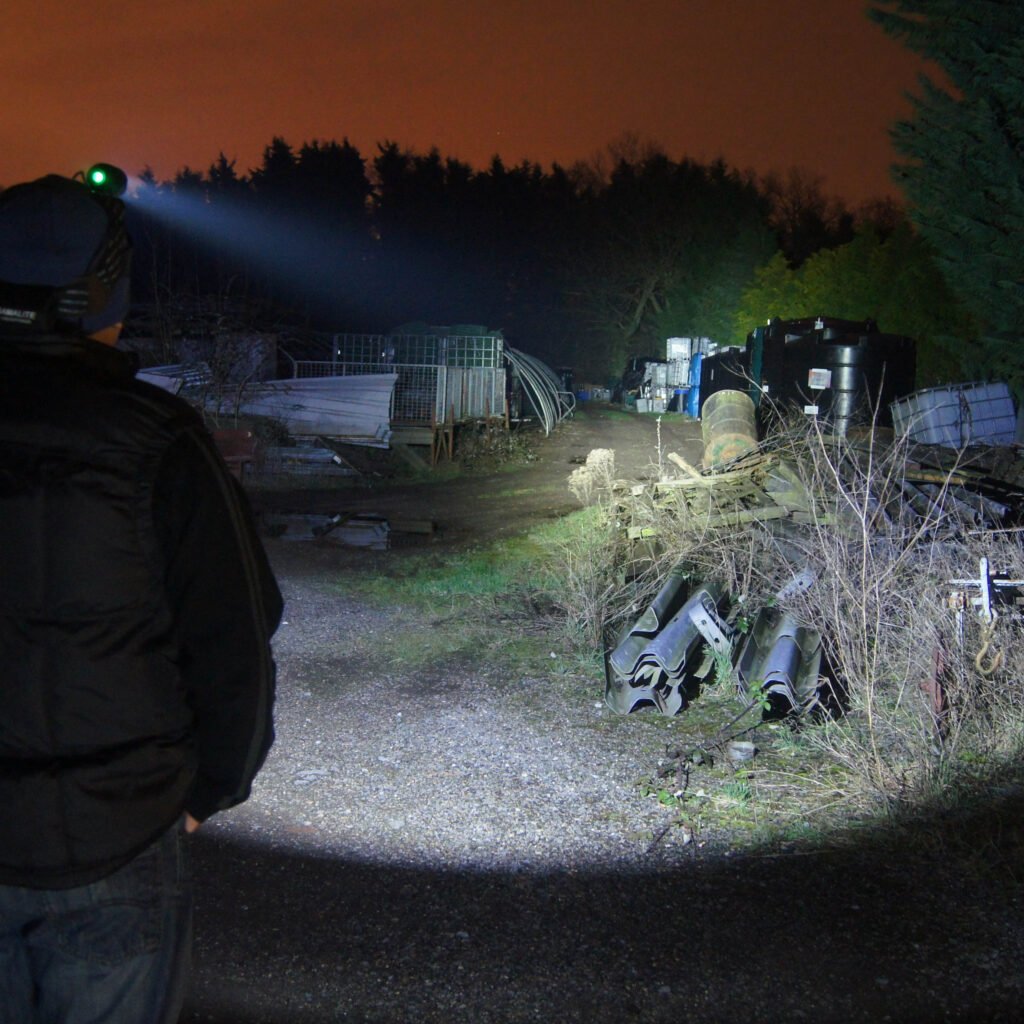
A standard working shift runs 8 to 12 hours. Many retail head torches quote maximum runtimes that are achieved only at the lowest brightness setting – often a mode that produces too little output to be useful for actual work. At working brightness, runtime may be a fraction of the quoted figure.
When specifying industrial head torches for trade teams, evaluate runtime at mid to high output. A quoted 20-hour runtime at low mode is irrelevant if your teams need 1000 lumens and get 3 hours at that setting.
For most professional applications:
- Minimum 8 hours at working output for standard shift coverage
- 10 to 12 hours preferred for longer shifts or deployments without charging access
- Fast charging (USB-C) to allow top-up during breaks where shifts are longer
Battery level indication is also worth specifying. Teams working in the field cannot afford unexpected shutdown mid-task. A clear visual indicator (ideally with a low-battery warning) lets the user manage power before it becomes a problem.
Lithium-Ion Batteries and Powerbelt Configurations
The battery technology and configuration of an industrial head torch affects both performance and wearability over a full shift.
Lithium-ion cells are the standard for professional rechargeable head torches. They offer high energy density, consistent voltage output across the discharge cycle, and good cycle life when treated correctly. Avoid units using NiMH or older battery chemistry for professional applications – they deliver lower energy density and less consistent output.
Powerbelt and remote battery configurations separate the battery pack from the torch head, moving significant weight away from the forehead and distributing it across the body – typically worn on a belt or vest. This configuration has two practical advantages for industrial use:
- Reduced head and neck fatigue over long shifts. A torch head weighing 300g worn on the forehead for 10 hours creates cumulative discomfort. A remote battery removes most of that weight.
- Higher capacity batteries become practical. A large lithium-ion pack worn on the body can power a high-output head torch for a full shift without the size constraints of a head-mounted unit.
For teams doing sustained high-intensity work (emergency response, railway maintenance, extended night shifts) a powerbelt configuration delivers both the output and the runtime that head-mounted battery units struggle to match simultaneously.
Comparing the Samalite Industrial Head Torch Range
Samalite’s professional head torch range is built specifically for trade and industrial use. Here is how the key models compare across the demands outlined in this guide.
HL600F – Compact Flood for Close Trade Work
The HL600F is a flood-beam unit built for tasks where close, even illumination matters more than long-range throw. Electrical work, wiring, panel inspection, and confined maintenance tasks are its home ground.
Compact and lightweight, it suits teams who need a reliable everyday carry unit for indoor and close-range trade work. Hard-hat compatible, IP-rated, and rechargeable – everything a professional unit should be, at a form factor that doesn’t get in the way.
Best for: electrical contractors, maintenance engineers, inspection work, confined space tasks.
HL1300W – The Versatile Mid-Range Professional
The HL1300W sits in the practical centre of the range. More output than the HL600 series, with the runtime to cover full shifts and the flexibility to handle both close task work and outdoor site use.
Adjustable beam capability means it adapts across the typical range of tasks a site maintenance team or contractor faces throughout a shift. Strong enough for outdoor navigation and site movement, controlled enough for close electrical and inspection work.
Best for: site managers, multi-trade maintenance teams, contractors working across indoor and outdoor environments.
HL3000W – Maximum Output for Demanding Environments
The HL3000W is the top of the Samalite range. High output, long runtime, and built for the most demanding professional environments – extended night shifts, railway and trackside inspection, emergency response, and any situation where inadequate illumination is not an acceptable outcome.
Where the HL600F and HL1300W cover the majority of trade applications, the HL3000W is specified when there is no margin for compromise. The output handles outdoor darkness, the runtime covers extended shifts, and the build quality is matched to the environments where serious professional lighting is required.
Best for: railway maintenance, emergency response, night shift supervisors, civil engineering, utilities field teams.
Quick Comparison
| Model | Best Output | Primary Beam | Best Application |
|---|---|---|---|
| HL600F | 600 lumens | Flood | Electrical, wiring, inspection, confined spaces |
| HL1300W | 1300 lumens | Adjustable | Multi-trade, site work, indoor and outdoor |
| HL3000W | 3000 lumens | Adjustable | Railway, emergency, high-output night work |
For teams needing coverage across multiple roles and task types, the Ultimate Kit bundles units across the range.
Specifying for a Team: Key Questions to Work Through
Buying a single unit is straightforward. Specifying head torches across a team or fleet requires more consideration.
What tasks do your teams primarily perform? Close electrical and inspection work favours flood-beam units at moderate output. Site supervision, outdoor maintenance, and emergency response need higher output with adjustable beam capability.
How long are your shifts? For standard 8-hour shifts, most professional units provide adequate runtime. For 10 to 12-hour shifts or deployments without charging access, specify accordingly and carry spares.
Do your teams work in hard-hat environments? Confirm clip compatibility with your existing PPE before ordering. If teams move between helmeted and non-helmeted environments, dual-mount capability matters.
What IP rating does your working environment require? IP65 covers most professional outdoor applications. Verify against the most demanding environment your teams operate in.
Will you standardise across the fleet? Consistent equipment across a team simplifies training, spares, and charging infrastructure. Mixed models from different manufacturers create complexity that costs time and money.
Frequently Asked Questions
Industrial and professional head torches are built to a higher standard across every relevant dimension – output, runtime, build quality, IP rating, and hard-hat compatibility. Consumer units are designed for occasional use in low-demand conditions. Professional units are designed to perform reliably across full shifts in demanding environments, withstand rough handling, and meet the IP ratings required for outdoor and industrial site use.
For close electrical and wiring work, 300 to 600 lumens from a flood beam is the practical range. Higher outputs create glare in confined spaces and on reflective surfaces, which reduces rather than improves visibility. Even illumination and good colour rendering matter more than raw lumen count for this type of work.
Yes, provided you specify correctly. Professional rechargeable head torches from industrial-grade manufacturers deliver reliable performance across full shifts when maintained and charged appropriately. The key is specifying units with genuine shift-length runtime at working output, not maximum quoted runtime at minimum brightness.
IP65 means the unit is completely protected against dust ingress (the 6) and resistant to water jets from any direction (the 5). For professional outdoor and site use in UK conditions, IP65 is the minimum rating worth specifying. It covers rain, splashing, and incidental water exposure reliably.
Separate battery packs – worn on a belt or body harness – move weight away from the head, reducing fatigue over long shifts. They also allow larger battery capacity than a head-mounted unit can practically carry, which supports higher output and longer runtime simultaneously. For extended high-intensity work, this configuration is worth specifying.
The HL1300W suits most site management applications well. It provides enough output for outdoor site movement and assessment, adjustable beam for different tasks, and the runtime to cover a full shift. The HL3000W is worth considering for supervisors working extended shifts in demanding outdoor or industrial environments.
Yes. Samalite head torches are designed for professional site use and are compatible with standard safety helmets. Check the specific clip system against your PPE before ordering. The full range is available at samalite.com/head-torches.