
Reliable illumination is fundamental to productive and safe operations on any construction site. Whether work continues after dark, takes place in enclosed spaces, or requires consistent lighting for precision tasks, the choice of lighting equipment directly affects operational efficiency, worker safety, and project timelines. For site managers, procurement teams, and engineers, selecting the right approach to temporary construction lighting involves balancing practical requirements against logistical constraints.
Two primary solutions dominate professional environments: rechargeable battery-powered lighting and traditional generator-powered systems. Each approach offers distinct operational characteristics that suit different scenarios. Understanding these differences enables informed decisions that align with specific site requirements, safety protocols, and operational priorities.
Understanding Generator-Powered Site Lighting
Generator-powered lighting has served construction sites for decades. These systems typically involve diesel or petrol generators connected to mast-mounted floodlights or tower lighting units. The approach provides sustained high-output illumination across large areas, making it a familiar choice for major civil engineering projects and large-scale construction works.
The primary advantage of generator systems lies in their ability to deliver continuous power over extended periods without requiring recharging cycles. For sites operating multiple shifts or running extended overnight operations, this uninterrupted power supply eliminates concerns about battery depletion during critical work phases.
However, generator-powered site lighting carries inherent operational considerations. Fuel logistics require regular deliveries and secure on-site storage, adding coordination requirements to project management. Noise output affects both workers and neighbouring properties, potentially limiting night operations in residential or urban environments. Exhaust emissions restrict use in enclosed spaces, tunnels, and confined areas where ventilation is limited.
Maintenance demands regular attention. Generators require scheduled servicing, fuel system checks, and component inspections. Downtime for maintenance or unexpected repairs can disrupt lighting availability precisely when it is needed most.
How Rechargeable Site Lighting Works
Modern rechargeable site lighting utilises lithium-ion or lithium iron phosphate battery technology combined with high-efficiency LED light sources. This combination delivers substantial illumination output while maintaining practical runtime durations suitable for professional applications. Units range from portable construction floodlights for task-specific work to larger area lighting systems capable of illuminating significant workspaces.
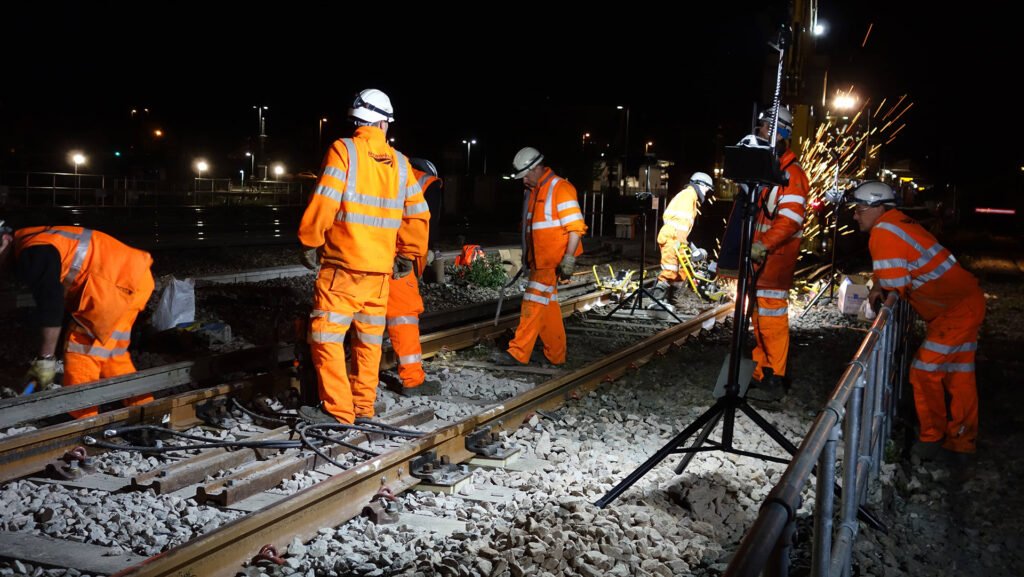
Battery-powered site lighting operates independently of fuel supplies or mains power connections. This characteristic fundamentally changes deployment logistics. Units can be positioned anywhere on site, moved as work progresses, and relocated between sites without infrastructure dependencies. For maintenance teams, inspection crews, and emergency response operations, this mobility proves particularly valuable.
Silent operation opens possibilities in noise-sensitive environments. Railway maintenance during night possessions, utility work in residential areas, and operations near hospitals or schools benefit from lighting that produces no engine noise. Similarly, zero emissions at point of use enables safe deployment in tunnels, basements, confined spaces, and indoor construction environments where exhaust fumes would pose health risks.
Runtime depends on battery capacity and output settings. Professional-grade units typically offer multiple brightness levels, allowing operators to balance illumination requirements against runtime needs. Many systems provide sufficient capacity for full shift coverage, with charging completed during off-shift periods.
Comparing Performance and Operational Factors
Deployment and Setup
Rechargeable lighting systems typically require minimal setup time. Portable units arrive ready to operate, requiring only positioning and activation. This rapid deployment suits dynamic work environments where lighting needs change frequently throughout a shift. Mobile construction lighting can follow crews as work progresses across different site areas.
Generator systems require more substantial setup, including fuel connection, safety exclusion zones, and potentially noise barriers. Repositioning involves shutting down equipment, moving heavy components, and re-establishing fuel connections. This fixed-position nature suits static work zones but limits flexibility.
Safety Considerations
Fuel storage and handling introduce specific hazard management requirements. Generators produce hot surfaces, moving parts, and exhaust gases that require appropriate safety measures. Refuelling procedures demand particular attention to prevent spills and fire risks. Sites may also require additional hazard warning lights to demarcate exclusion zones around running equipment.
Battery-powered systems eliminate these fuel-related hazards. Without combustion processes, risks associated with flammable materials, carbon monoxide exposure, and hot exhaust components are removed. This simplified risk profile can reduce safety briefing requirements and allow deployment by personnel without specialist fuel-handling training.
Operating Costs
Ongoing operational costs differ substantially between approaches. Generator systems incur continuous fuel expenditure, with consumption rates varying by load and efficiency. Fuel price fluctuations affect operating budgets unpredictably. Maintenance costs include regular servicing, oil changes, filter replacements, and component wear items.
Rechargeable systems primarily consume electricity for charging, typically at significantly lower cost per hour of illumination than diesel consumption. Maintenance requirements are substantially reduced, with LED light sources lasting thousands of hours and battery systems requiring minimal routine attention.
Environmental and Compliance Factors
Environmental regulations and sustainability commitments increasingly influence equipment choices. Zero-emission operation supports carbon reduction targets and may be required for projects with environmental conditions attached to planning permissions. Noise restrictions in urban environments may preclude generator use during certain hours.
For contractors working on environmentally sensitive sites, near watercourses, or in areas with protected wildlife, rechargeable site lighting avoids risks associated with fuel spills and eliminates noise disturbance to fauna.
When Rechargeable Lighting Is the Better Choice
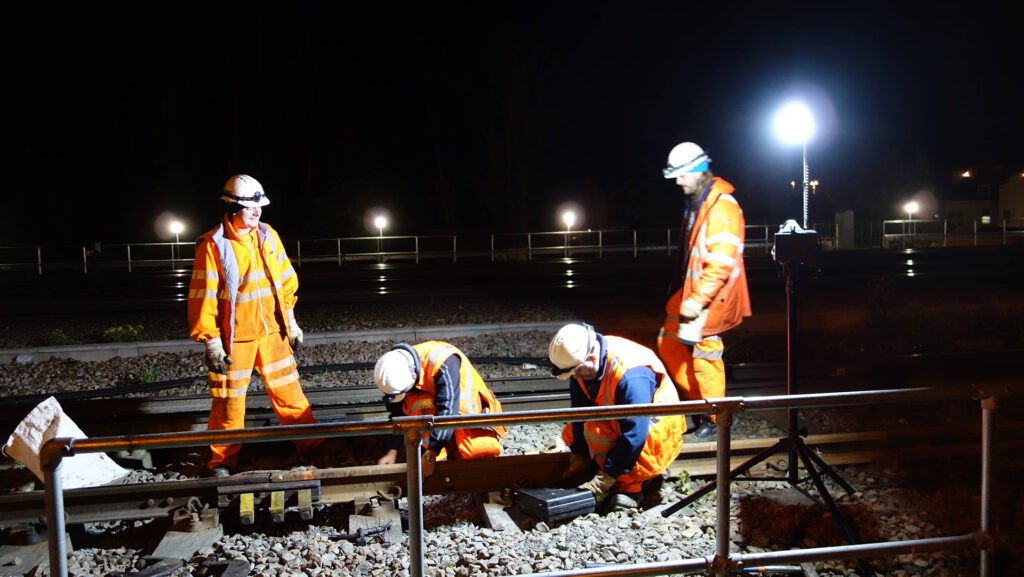
Certain operational scenarios clearly favour battery-powered solutions. Confined space work, including tunnels, culverts, basements, and enclosed structures, demands emission-free lighting. Portable LED floodlights designed for industrial environments must not introduce combustion byproducts that compromise air quality or worker health.
Emergency construction lighting benefits from the instant deployment capability of rechargeable units. When rapid response is essential—whether for unplanned repairs, emergency works, or incident response—equipment that operates immediately without fuel preparation provides critical time savings.
Railway and infrastructure maintenance during night possessions often involves multiple work sites spread across extended distances. Portable site lighting that can be quickly positioned, repositioned, and recovered within tight possession windows suits these demanding time constraints. Workers conducting close inspection tasks may supplement area lighting with rechargeable head torches for hands-free illumination.
Inspection and survey work frequently requires lighting at multiple locations throughout a single shift. Carrying rechargeable units between positions proves far more practical than establishing generator infrastructure at each inspection point.
Sites without generator operation experience may benefit from the simplified training requirements of battery-powered equipment. Reducing complexity in lighting operations allows personnel to focus on primary work activities.
When Generator-Powered Lighting May Still Be Appropriate
Generator systems retain advantages in specific circumstances. Very large open sites requiring sustained high-output illumination across extensive areas may benefit from the continuous power availability of generator-fed lighting towers, particularly when other equipment also requires generator power.
Extended continuous operations exceeding practical battery runtime limits—such as multiple consecutive shifts without charging opportunities—may necessitate generator backup. However, rotating multiple battery units can often address this need while retaining rechargeable benefits.
Remote locations without any electrical infrastructure for charging present particular challenges for battery-dependent equipment. Sites requiring complete energy independence for extended periods may require generator solutions, though solar charging options increasingly address this limitation.
Projects already committed to generator infrastructure for power tools and other equipment may achieve operational simplicity by connecting lighting to existing power distribution rather than managing separate battery charging logistics.
Key Considerations Before Choosing Professional Lighting
Before selecting temporary worksite lighting equipment, site managers should evaluate several factors. Work environment characteristics—including indoor versus outdoor operation, ventilation availability, and noise sensitivity—often provide the clearest guidance on suitable technology.
Shift patterns and runtime requirements determine whether battery capacity meets operational needs or whether backup solutions are necessary. Understanding actual illumination duration requirements prevents over-specification or capability shortfalls.
Mobility requirements vary significantly between projects. Fixed perimeter lighting suits static boundaries, while task lighting following work progression demands portable solutions. For crews moving frequently between locations, ultralight portable lighting systems offer practical advantages over heavier equipment.
Charging infrastructure availability affects rechargeable equipment practicality. Sites with reliable mains power can readily support battery charging, while remote locations may require planned charging rotation or alternative solutions.
Contract requirements and client specifications increasingly mandate sustainable equipment choices. Environmental certifications, carbon reporting obligations, and sustainability commitments may influence or determine acceptable lighting technologies.
Conclusion: Making the Right Decision for Your Site
The choice between rechargeable and generator-powered construction site lighting depends on specific operational requirements rather than absolute superiority of either approach. Modern rechargeable LED systems offer compelling advantages in mobility, safety, operating costs, and environmental compliance that suit the majority of professional applications.
Generator systems remain relevant for specific high-demand scenarios but carry operational complexities that increasingly favour alternatives where practical. Many professional operations now employ mixed approaches, using rechargeable lighting for routine tasks and maintaining generator capability only where genuinely required.
Evaluating actual site requirements—work environment, runtime needs, mobility demands, safety considerations, and compliance obligations—enables informed equipment decisions. The most effective approach matches lighting technology to genuine operational needs rather than defaulting to familiar solutions.